Thursday, 20 June 2019

Anwar has fallen into Mahathir’s trap

Anwar has fallen into Mahathir’s trap

Raggie Jessy Rithaudeen

What if I told you that Dato’ Seri Anwar Ibrahim wasn’t behind the sex videos featuring Dato’ Seri Azmin Ali and Haziq Abdullah Abdul Aziz?

Let’s cut the crap.


Everyone knows that the person in the videos was Azmin, not his clone or lookalike. For the purpose of this article, we’re simply going to go with such terms as “Sodomy 2019” or the “Azmin-Haziq clips” and forget about the political correctness and all. So once again, what if I told you that the person who fixed Azmin up was none other than the Prime Minister of Malaysia, Tun Dr Mahathir Mohamad?

Actually, I’ve already hinted of this a couple of times. In previous articles (see links below), I spoke of a plan to ‘weaken’ Azmin to ensure that when he’s made Prime Minister, he would swear off all allegiance with Anwar and keep Mahathir’s men by his side at all times.

READ: DON’T BE TOO SURE MAHATHIR ISN’T BEHIND SEX SCANDAL

THEN READ: RJ RITHAUDEEN: USAH MIMPI, ANWAR TIDAK AKAN MENJADI PM SAMPAI BILA-BILA

AFTER THAT, READ: SEX VIDEOS INVOLVING TWO MINISTERS, NOT ONE. EXPECT MORE SURPRISES

READ ALSO:RANCANGAN MENJADIKAN AZMIN ALI PM KE-8

FINALLY, READ:RANCANGAN ANWAR MENJADIKAN WAN AZIZAH PM KE-8

Mahathir does not believe for one minute that when the time comes, Azmin will hand over the country’s premiership to his (Mahathir’s) son, Dato’ Seri Mukhriz Mahathir. So he needs to ensure that Azmin will forever be bedevilled by a sex scandal and would need Mukhriz, Tan Sri Rais Yatim and Tun Daim Zainuddin around him to back him up.

Under the circumstances, should Azmin actually become Prime Minister and one day backstab Mukhriz, a plan would be hatched to implicate him of Sodomy 2019 with the help of Home-Minister-designate, Rais Yatim. Yes, as much as you believe that Sodomy 2019 was an Anwar job, the PKR president was just as shocked as Rafizi Ramli was but did precisely what Mahathir knew he would do.

Jump onto the bandwagon.

The thing is, many are saying that Anwar had enough time in prison to figure out a grand plan to take over the country’s premiership from Mahathir. But many forget, that by the time the old man came into the picture, plans were already afoot to grant Anwar a pardon in the event Pakatan Harapan took over government from Barisan Nasional.

So you see, Anwar did not really have that much time in isolation to plan a neat strategy to go for Mahathir’s jugular. Everyone in Pakatan Harapan was too busy entering deals with one another to properly iron out a scheme to kill Mahathir off.

Anyway, Mahathir knows Anwar all too well. He knows, that his former deputy does not have the capacity to put on a believable poker face, gets overexcited at the slightest hint of success and isn’t able to make effective decisions when he’s overconfident.

And that’s precisely what Mahathir sought to do – make Anwar overconfident. He did the one thing he knew Anwar would never believe he was capable of doing – ‘kill’ Azmin. Mahathir knew that Azmin was Anwar’s enemy, that in Anwar’s books, jumping onto the enemy’s bandwagon to kill off the common enemy was a wise strategy.

So a plan was hatched to paint Azmin up to be the common enemy. Mahathir got his cronies to pay off 15 PKR Members of Parliament (MPs) from team Anwar, 10 MPs from Sabah and Sarawak and 40 others from UMNO, the DAP and AMANAH.

Coupled with the 25 PKR MPs aligned with Azmin – who, just so that you know, have long been paid off – the Prime Minister is said to have secured written commitments from a total of 105 MPs (including 15 from PPBM), all of whom were given permission to attend Anwar functions at will and flash smiles in front of cameras.

The plan, as I said, was to give Anwar the impression that he had the upper hand.

And seeing that the majority of MPs were ‘supportive’ of him and willing to smile in front of cameras while by his side, the PKR president did not feel it necessary to pay the MPs off and merely got some billionaires to pledge some funds.

The pledge, I’m told, was USD5 million per MP from Sabah and Sarawak. Mahathir, on the other hand, is said to have paid off 65 MPs a total of RM1.5 billion to secure undated agreements, all of which are signed, witnessed and legally stamped.

The stage was set.

The only thing left for Mahathir to do was to hurt Azmin in such a way that Anwar would get overexcited and believe that the time was rife to trigger a coup. Mahathir had long known of a fetish Azmin was into. Accordingly, it was put to him that his handpicked successor loved to record his sexcpades without the knowledge of the people he had sex with.

As the story goes, a PKR guy close to camp Mahathir got a hold of one of the videos and informed members of the camp that Azmin was in it. A plan was quickly hatched to leak the videos and to leak news of the impending leak to Anwar’s men.

Needless to say, the minute these men got word of the clips, they began communicating with each other and planned ways to bring Haziq to their side. They wanted to do the release their way but were too late – the videos were made public even before they could begin negotiations. It is unclear at this point if Haziq took Anwar’s men for a ride, though many of the MPs Mahathir paid off were instructed to do just that.

What’s clear, though, is that the back and forth between Anwar and his men extended also to several leaders from UMNO, the DAP and PPBM. Intel of the communications that took place between them reached Mahathir but did not surprise him one bit. On the contrary, everything was planned in such a way that the Prime Minister would get to know who in UMNO was with team Anwar and who wasn’t.

Everything worked to his favour.

The plan had all along been to trigger excitement in camp Anwar so that everyone would jump onto the “Azmin” bandwagon, communicate plans with each other and leave trails of evidence that pointed to Anwar. Even those claiming to be Mahathir’s closest ‘confidantes’ are convinced, based on the intel they received, that Anwar architected the whole affair.

So, with the Chief Justice, the MACC Chief and the Inspector General of Police at his ‘disposal’, and with 123 MPs (including those from PAS) on his side, Mahathir is sitting with arms folded, waiting. The minute Anwar springs on him, you can bet your last dollar that the two weeks thereafter would be the most interesting two weeks of your lifetime.

That having been said, remember – in politics, 24 hours can be a very long time. There is no telling who will strike what deal, when and where after reading this article. As it is, Mahathir is already considering the possibility of forgoing Azmin and may consider someone else as the country’s eighth Prime Minister.

To be continued…

Sunday, 9 June 2019

Pengaruh Penguasa Tiran dan Pengalaman Hilangnya ’Adab’ di kawasan Asia Tenggara (3)

Pengaruh Penguasa Tiran dan Pengalaman Hilangnya ’Adab’ di kawasan Asia Tenggara (3)


ASIA, ISLAM

Oleh: Ady C. Effendy,

Pendudukan oleh kekuatan asing Barat bahkan dianggap sebagai salah satu factor yang mendorong konversi massal kedalam agama Islam karena penguasa pribumi merasa Islam merupakan kekuatan penyeimbang alami terhadap agama Kristen yang datang bersama dengan penjajahan/kolonisasi. Namun demikian, kegiatan misionaris Kristen berjalan sangat sukses di wilayah utara Filipina diantaranya disebabkan karena adanya komitmen yang kuat dari kerajaan Spanyol di Eropa untuk menyebarkan pesan dari Alkitab melalui kristenisasi besar-besaran.

Pada tahun 1565, angkatan laut Spanyol yang datang dari Meksiko memasuki tanah Filipina (yang dinamai sesuai nama Raja Philip II dari Spanyol). Kekuasaan kolonial akhirnya berhasil menggulingkan Sultan Muslim Manila pada tahun 1571 dan mengalihkan otoritas kekuasaan dibawah kerajaan Spanyol. Dibawah kekuasaan kolonial Spanyol, kristenisasi terhadap penduduk asli kepulauan Filipina adalah kebijakan utama yang harus dilaksanakan. Menggunakan Gereja sebagai media administrasi pemerintahan di wilayah ini, kekuasaan kolonial Spanyol berhasil memasukkan penduduk asli ke dalam agama Kristen. Selain Kristenisasi oleh penguasa Spanyol, setelah proses kemerdekaan Filipina dari Spanyol yang didukung oleh Amerika Serikat, kondisi Muslim Moro dari kepulauan Filipina selatan bahkan memburuk. Kebijakan yang diterapkan pada masyarakat Muslim setempat sangatlah merusak budaya tradisional serta struktur sosial yang ada. Kebijakan ini meliputi: pendirian sekolah baru di mana kurikulum baru yang non-Islami diberikan, pembentukan pemerintah provinsi baru yang dipimpin oleh seorang Gubernur yang diangkat dari Manila, yang otoritasnya benar-benar melangkahi kekuasaan para sultan, dan para datuk yang bersifat tradisional; dan penggantian syariah dengan sistem hukum yang baru. Transformasi besar masyarakat Muslim dan warisan tradisinya oleh penguasa kolonial ini, yang kemudian dilanjutkan oleh pemerintah nasional Filipina telah menyebabkan kebencian yang mendalam di hati umat Islam pribumi yang menyingkir ke wilayah selatan. Ini juga merupakan alasan utama perlawanan yang berkelanjutan melawan pemerintah pusat di Filipina.

Belanda memulai penjajahan di Asia Tenggara dibalik topeng samara sebuah perusahaan perdagangan yang disebut Perusahaan Dagang Belanda di Hindia Timur (VOC) yang didirikan pada tahun 1602.

Selama periode panjang penjajahan, Belanda berhasil mengubah fitur-fitur Islam diwilayah ini. Hal ini dilakukan terutama melalui program-program pendidikan yang dirancang untuk mempersiapkan pegawai sipil yang patuh dan setia kepada kekuasaan kolonial Belanda, serta yang bantuannya terhadap pemerintah kolonial sangatlah penting bagi keberlangsungan penjajahan. Penyokong kekuasaan kolonial Belanda ini umumnya direkrut dari orang-orang berkelas tinggi di wilayah setempat atau bahkan juga kalangan yang memerintah. Mereka dididik di sekolah-sekolah yang didirikan oleh kekuasaan kolonial dimana mereka belajar bahasa asing, sejarah, budaya dan peradaban kekuasaan kolonial. Siswa-siswa yang cukup cerdas akan dikirim ke kota-kota besar atau ibukota kekuatan kolonial untuk belajar di tingkat universitas dalam berbagai mata pelajaran, terutama dalam bidang sosial politik. Hal ini dianggap sebagai investasi jangka panjang oleh kekuatan kolonial untuk melayani kepentingan kolonial mereka karena para mahasiswa tersebut akan kembali ke tanah air dan menjadi para elit penguasa baru yang melayani penjajah mereka.

Para ulama Islam tradisional setempat, di sisi lain, mengerahkan upaya mereka untuk melestarikan pembelajaran Islam tradisional melalui sekolah sederhana yang disebut pesantren di mana murid setempat diajarkan ilmu-ilmu Islam tradisional. Meskipun memiliki sumber daya minimal, lembaga tradisional ini memperoleh penerimaan luas di antara masyarakat setempat khususnya di tanah Jawa, dan mampu membangun jaringan otoritas tradisional yang kuat, yang jauh dari jangkauan kekuasaan kolonial serta negara pasca-kolonial. Lembaga tradisional pesantren jelas menawarkan visi lain dalam cara membangun potensi manusia yang menentang tujuan inti lembaga pendidikan kolonial modern yang cenderung untuk membangun ‘peralatan’ manusia untuk ’pabrik’ kolonial daripada individu yang mandiri dan bebas.

Dua visi yang saling bersaing, sekolah Islam tradisional dan institusi pendidikan modern, benar-benar telah menciptakan lahan pertarungan antara para pendukung masing-masing visi. Meski tidak memiliki sumber daya yang melimpah, para pendukung pendidikan tradisional berhasil dalam membangun otoritas informal yang kuat atas penduduk asli serta menantang dan membatasi efektivitas otoritas resmi yang dimiliki oleh kekuasaan kolonial serta para pewarisnya didalam negara pasca-kolonial kemudian hari.

Kewenangan (otoritas) informal para ulama begitu kuat sehingga dapat dipergunakan untuk memobilisasi pengikut mereka dalam peperangan anti-penjajahan yang berulang kali terjadi dengan pasukan asing yang menindas tersebut. Di sisi lain, bagaimanapun juga, lembaga sosialpolitik baru yang diperkenalkan di tengah-tengah wilayah yang dijajah juga berhasil mengurangi peran ulama yang sebelumnya jauh lebih luas, bukan semata-mata sebagai pendidik, tetapi juga mencakup peran mereka sebagai mufti dan hakim. Kemustahilan ulama Islam tradisional untuk melaksanakan peran mereka dalam aspek hukum jelas terlihat oleh kenyataan bahwa hal pertama yang dilakukan kekuasaan kolonial ketika mulai menduduki negeri-negeri Muslim adalah menghancurkan kesultanan Islam, juga memutus pola kerjasama antara sultan Muslim dan ulama Islam, dan penerapan Hukum Islam (Syariah) itu sendiri.

Selama era pasca-kolonial, para ulama tradisional diberikan peranan parsial dalam pengadilan Islam yakni hanya memutus kasus di bidang persoalan pribadi Muslim (al ahwal-alshakhsiya). Hal ini, tentu saja, merupakan konsekuensi yang jelas dari negara paska-penjajahan yang hanya mewarisi sistem sekuler kolonial.

Kondisi selama penjajahan tanah Melayu oleh kekuatan kolonial Inggris agak berbeda dari pengalaman Indonesia dan Filipina. Inggris berupaya untuk menggunakan kebijakan ’lunak’ dengan campur tangan terbatas terhadap adat istiadat setempat dan agama. Kebijakan ini telah mendukung penguatan tradisi Islam serta budaya Melayu di kalangan masyarakat Melayu, khususnya di negara-negara yang lebih miskin, seperti Perlis, Kedah, Terengganu, Kelantan di utara dan Johor di Selatan. Politik kerjasama antara sultan-sultan Melayu dan kekuasaan kolonial Inggris telah terbukti secara efektif meningkatkan kekuatan politik sultan Melayu, menyebarkan wacana politik Islam, serta melestarikan tradisi Islam di tanah Melayu paska kemerdekaan. Keuntungan ini tidak dinikmati oleh kaum muslimin dari kawasan Asia Tenggara lainnya seperti Indonesia dan Filipina, di mana pencabutan tradisi Islam dari rakyat dan pembentukan kelas elit penguasa sekuler telah berhasil meminggirkan wacana politik Islam di ruang publik.

Gambaran sejarah pertemuan antara kekuatan kolonial dengan lembaga-lembaga Islam tradisional dan pesantren di kepulauan Muslim Asia Tenggara menunjukkan dengan jelas bagaimana berbagai peristiwa ini telah menyebabkan munculnya jenis Muslim baru yang dididik berdasarkan sistem pendidikan kolonial. Pendidikan kolonial berhasil menyangkal dari para Muslim ini hak mereka untuk mendapatkan pendidikan dasar sesuai dengan iman dan tradisi mereka. Dampak transformasi pendidikan ini terhadap pemahaman, pandangan hidup, dan praktek-praktek keimanan umat Islam sangatlah besar dan menyentuh berbagai aspek kehidupan mereka. Pada akhirnya, hal ini menyebabkan transformasi menyeluruh dari peran sosial politik dan agama Islam di kawasan ini. Jika sebelum era kolonial, Islam adalah wacana utama dalam perjuangan politik serta kehidupan sosial budaya Muslim di kawasan ini, selanjutnya sekularisme telah berhasil mengambil alih peran Islam dan mengubah masyarakat Muslim menjadi masyarakat yang lebih secular dan berorientasi duniawi daripada sebelumnya.

Fenomena ini digambarkan secara sempurna oleh Al-Attas sebagai peristiwa hilangnya adab, yaitu hilangnya disiplin tubuh, pikiran, dan jiwa. Hilangnya disiplin diri dimulai oleh kekuasaan kolonial melalui pengenalan pendidikan sekuler baru sebagai alternatif pendidikan Islam tradisional untuk memutus mata rantai generasi Islam yang telah menyerap pandangan hidup Islami. Selain keunggulan budaya ini, kekuasaan kolonial berusaha membangun kelas baru pegawai sipil untuk membantu administrasi atau pemerintahan koloni-koloni mereka. Dalam periode pasca-kolonial, kelas pegawai sipil yang pernah dididik di bawah sistem pendidikan kolonial ini berubah menjadi pemimpin nasional yang baru memiliki agenda baru untuk mendirikan negara sekuler sebagai pewaris kekuasaan kolonial.

Adalah melalui pendidikan kolonial ini, kekuasaan kolonial menciptakan Muslim yang ’lalai’, yang telah dirampas dari hak-hak mereka untuk mempelajari pengetahuan, disiplin, dan pandangan dunia berdasarkan agama mereka. Pendidikan kolonial, pada kenyataannya, memperkenalkan dan menanamkan secara halus pandangan dunia sekuler ke dalam pikiran generasi Muslim baru. Hasil dari pendidikan kolonial ini adalah Muslim yang ’lalai’ yang tidak memahami tuntutan agama mereka agar menjadi Muslim yang baik. Pewaris-pewaris negara baru sesungguhnya tidak memenuhi syarat untuk menjadi pemimpin umat Islam karena mereka tidak memiliki standar moral, intelektual dan spiritual yang tinggi untuk melayani masyarakat Muslim.

Akibatnya, mereka berkompromi terutama dengan kekuatan neo-imperialis asing yang berusaha untuk menjajah negara-negara baru ini melalui aspek sosio-ekonomi dan politik meskipun tidak secara militer seperti yang terjadi sebelumnya. Terkait urusan dalam negeri, para pemimpin ini cenderung mengkorupsi dana publik dan mendukung kebijakan-kebijakan dan hukum yang bertentangan dengan moralitas publik, atau terhadap ajaran Islam pada umumnya, belum lagi syariah itu sendiri yang telah benar-benar dibatalkan. Inilah kondisi dunia Islam yang ada saat ini. Negara-negara modern dengan mayoritas Muslim dan para pemimpin Muslim telah dikategorikan sejak kemerdekaan mereka sebagai negara gagal dengan tingkat korupsi yang tinggi, tingginya angka pengangguran dan tingkat kemiskinan, dan angka statistik kriminal yang tinggi, serta diperintah oleh rezim yang diktator. Kondisi ini akan tetap tidak berubah kecuali umat Islam kembali kepada disiplin diri mereka seperti yang dilakukan para pendahulu mereka di masa lalu. Sebagai kesimpulan, situasi kontemporer di mana dunia Islam menemukan dirinya hari ini adalah mustahil dirubah, kecuali bila kaum Muslim berusaha untuk memecahkan masalah inti yang diderita oleh individu Muslim yaitu masalah akut hilangnya disiplin diri atau ‘adab’.*

Penulis Mahasiswa S2 MA Contemporary Muslim Thought and Societies Qatar Faculty of Islamic Studies Hamad Bin Khalifa University

Rep: -

Editor: Cholis Akbar

Friday, 7 June 2019

Latheefa appointment: Mahathir is after a PH Minister, not Anwar

Latheefa appointment: Mahathir is after a PH Minister, not Anwar

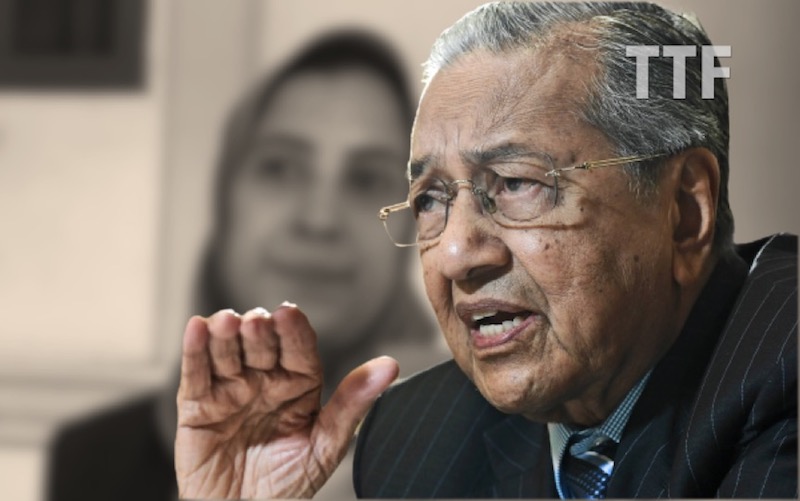
Mahathir already has the people he needs at the highest rungs in the police force and judiciary and only needs one of his own men to replace Tommy Thomas as Attorney General before he can afford to put a spoke in Anwar’s wheels. Source (pic): TTF

Speculation is rife that the appointment of Lawyers for Liberty co-founder Latheefa Koya by Prime Minister Tun Dr Mahathir Mohamad is to dig up the dirt on Dato’ Seri Anwar Ibrahim in a bid to put the PKR president on the witness’ stand and send him to jail.

But that is not the case.

A very senior government Minister is said to be the target, and he is someone Tun Daim Zainuddin can no longer tolerate and wants put in the witness’ box for a number of reasons.


PETALING JAYA: Speculation is rife that the appointment of Lawyers for Liberty co-founder Latheefa Koya by Prime Minister Tun Dr Mahathir Mohamad is to dig up the dirt on Dato’ Seri Anwar Ibrahim in a bid to put the PKR president on the witness’ stand and send him to jail.

But that is not the case.

Mahathir already has the people he needs at the highest rungs in the police force and judiciary and only needs one of his own men to replace Tommy Thomas as Attorney General before he can afford to put a spoke in Anwar’s wheels.


It follows, the evidence that is set to do Anwar in has nothing to do with corruption or bribery, isn’t likely to involve Latheefa or the MACC but will most certainly see the replacement of Thomas as Attorney General.

Latheefa’s appointment is said to have been incentivised by something of an entirely different nature, having to do with a corruption scandal that was previously brushed aside by Thomas and former Chief Justice Richard Malanjum.

A very important government Minister is said to be the target, and he is someone Tun Daim Zainuddin can no longer tolerate and wants put in the witness’ box for a number of reasons.

Dato’ Seri Mohd Shukri Abdull was incapacitated to do anything about that Minister because the party from which the Minister helms had its grip on Shukri’s neck owing to two previous conspiracies several personnel in the MACC linked to Shukri were said to be involved in.

Latheefa is linked to Daim by virtue of her associations with Messrs Daim & Gamany, a law firm co-founded by Daim where he began his profession as a private legal practitioner.

Daim is currently listed as the 14th most senior lawyer in Malaysia, having been admitted to the Malayan Bar on the 27thof February, 1961.

According to the Bar Council website, he obtained his certificate to practise law on the 12thof January the same year.

THE THIRD FORCE

Evidence suggests Gani Patail was complicit with WSJ in SRC raid


Evidence suggests Gani Patail was complicit with WSJ in SRC raid


Gani should appear as prosecution witness to explain the STF’s raids on the three entities named by the WSJ and prove that the STF was established after the WSJ published its report, not before. Source (pic): SAYS

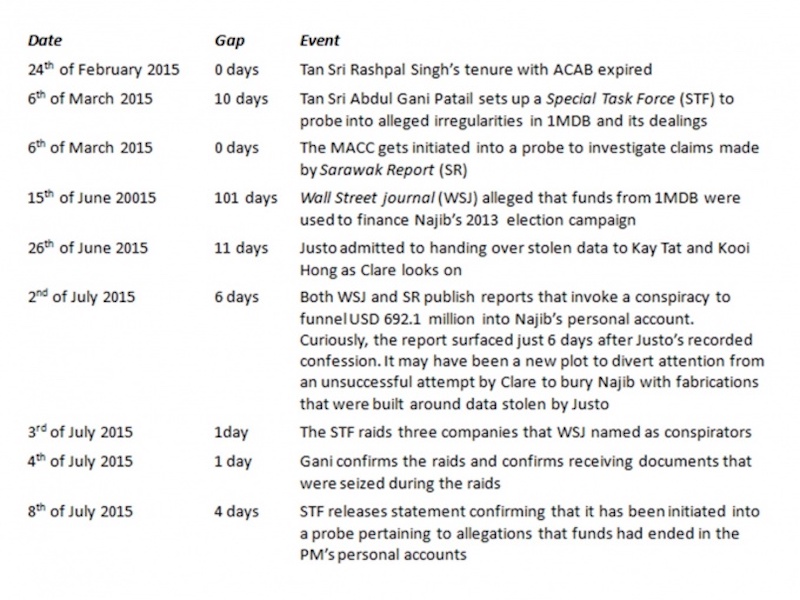
On the 6th of March 2015, former Malaysian Attorney-General Tan Sri Abdul Gani Patail set up a Special Task Force (STF) to investigate irregularities that concerned 1MDB.

Then, on the 8th of July 2015, he told newsmen that the STF was established for the sole purpose of getting to the bottom of claims made by WSJ.

That could only have been true had the daily made those claims before the STF was established.

However, the WSJ report surfaced on the 2nd of July 2015, a good 128 days from the day the task force was established (refer table below).


SUBANG JAYA: The press reported yesterday that the third prosecution witness in Dato’ Seri Najib Tun Razak’s corruption trial, BNM’s Financial Intelligence and Enforcement Unit analyst Mohammad Nizam Yahya, told the Kuala Lumpur High Court that he served a notice under Section 37(1) of the Anti-Money Laundering, Terrorism Financing and Proceeds of Unlawful Activities Act (Amla) to Affin Bank to get some documents.

“I was instructed by my department’s director Abd Rahman Abu Bakar to serve the AMLA notice to obtain banking documents on accounts owned by Ihsan Perdana Sdn Bhd.

“The serving took place at the bank’s headquarters along Jalan Raja Chulan on July 6,” he said when examined by deputy Public Prosecutor Datuk Suhaimi Ibrahim.


According to Nizam, Affin Bank Berhad’s chief legal officer and company secretary Nimma Safira Khalid provided the necessary documents on three bank accounts owned by Ihsan Perdana, disclosing that the documents included account opening forms, specimen signature forms and statements of accounts since they were opened.

A report by the Malay Mail Online read:

Mohammad Nizam said he went with two other BNM officers to Affin Bank on July 6, 2015 from 10am until around 9pm, and had signed a form acknowledging his receiving of the banking details from Nimma at around 7.55pm the same day.

When asked what happened to the documents that were handed over, Muhammad Nizam said he kept them in a secure location at his department.

1MDB Special Task Force

Mohammad Nizam said several representatives from a special task force later came to make copies of the documents that Affin Bank provided to him.

When asked by Najib’s lawyer Harvinderjit Singh if he was informed prior to the serving of the notice that the investigations was for the taskforce, Mohammad Nizam replied: “As far as I know, the documents I had to take is for the taskforce.”

Harvinderjit then asked if the taskforce mentioned was the special team set up in July 2015 that comprised the Malaysian Anti-Corruption Commission, the police, BNM and the Attorney General’s Chamber.

Mohammad Nizam said he could not confirm whether it was the same taskforce.

It was the same taskforce.

Referred to as the special task force, the vaguely-defined unit was established and headed by the then Attorney General of Malaysia, Tan Sri Abdul Gani Patail, together with (then) Bank Negara governor Tan Sri Zeti Akhtar Aziz, (then) Inspector-General of Police Tan Sri Khalid Abu Bakar and (then) MACC chief Tan Sri Abu Kassim Mohamed.

On the 27thof June 2018, The Third Force wrote:

On the 6th of March 2015, former Malaysian Attorney-General Tan Sri Abdul Gani Patail set up a Special Task Force (STF) to investigate irregularities that concerned 1MDB.

Then, on the 8th of July 2015, he told newsmen that the STF was established for the sole purpose of getting to the bottom of claims made by WSJ.

That could only have been true had the daily made those claims before the STF was established.

However, the WSJ report surfaced on the 2nd of July 2015, a good 128 days from the day the task force was established (refer table below).

And that can only mean one thing – Gani lied.

The former AG knew months ahead what the WSJ was about to write.

The fact that a conspiracy existed between him and the daily is further established when one considers the following:

On the 4th of July 2015, Gani announced the seizure of some documents following a raid by the STF on three business entities named by the WSJ in its 2nd of July 2015 report (see table above).

However, the daily made it clear that the report was hinged on documentary evidence provided to it by unnamed Malaysian investigators.

But that could not have been possible, as checks by TTF revealed that no authority had ever conducted an investigation on any of the three entities prior to the 4th of July 2015 raid.

Then, on the 7th of July 2018, The Third Force wrote:

Last Wednesday (the 4th of July 2018), Dato’ Seri Najib Tun Razak was produced at the Kuala Lumpur Sessions court to face four corruption charges brought against him by the MACC.

The session was meant for the court to read out the charges, for Najib to enter his plea and for the court to fix bail.

But what transpired was anything but ordinary and immediately brought to question Tommy Thomas’ eligibility to lead the prosecution.

Almost as soon as Najib’s lead counsel, Tan Sri Muhammad Shafee Abdullah, applied for a media gag order, Tommy objected by saying that the whole world knew of Najib’s involvement in the 1MDB scandal.

The AG cited a United States (US) Department of Justice (DoJ) report and online editorials published via Sarawak Report (SR) and Wall Street Journal (WSJ) as basis to his contention and added that the scandal had brought great shame to the country.

What this means, is Tommy had already begun the trial despite the Wednesday session being anything but one.

What this also means, is that the trials against Najib are not hinged exclusively on discoveries made by the MACC or the police, but inconclusive news reports circulated by media channels such as the WSJ.

This suggests that not only was Gani, a former Malaysian AG, complicit the WSJ to nail Najib, so is the current AG, Tommy Thomas.

As a matter of fact, Tommy seems to think the world of the WSJ despite multiple news reports worldwide suggesting that the New York based daily is in the business of fake news and regime changes.

And this is what Lim Guan Eng had to say on the 8th of January 2019:

“I don’t want to say yes or no for now, I have to check records.

“If there is anything that explicitly state this in black and white, we will pursue the case,” he said.

Lim was commenting on a Wall Street Journal report that cited minutes from meetings it allegedly reviewed.

According to the report, Chinese officials told visiting Malaysians that China would use its influence to try and get the US and other countries to drop probes on allegations that Najib’s allies plundered 1MDB.

Given that Tommy Thomas is very certain the WSJ tells the truth, will the High Court now issue Guan Eng a subpoena to testify whether he discovered anything ‘peculiar’ in his ministry’s records suggesting that China tried to solicit the withdrawal of probes related to 1MDB?

Come to think of it, will Tommy also push for Gani to appear as prosecution witness to explain the STF’s raids on the three entities named by the WSJ and prove that the STF was established after the WSJ published its report, not before?

THE THIRD FORCE

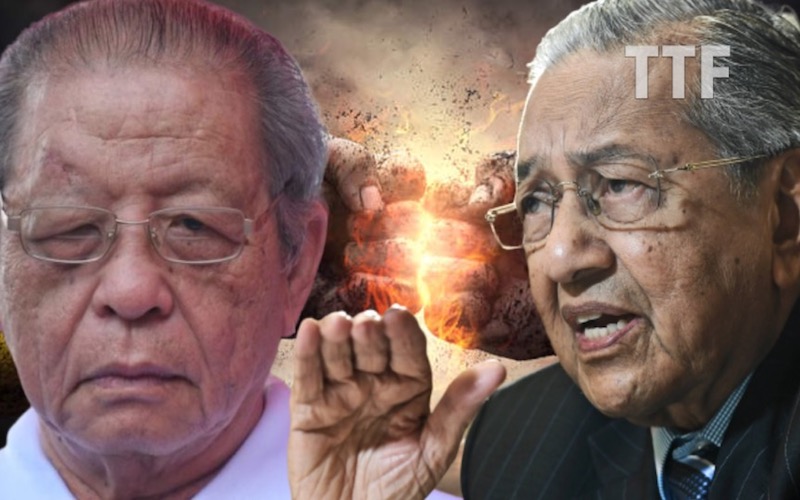
The long knives are pointed at your son, Kit Siang

The long knives are pointed at your son, Kit Siang

Raggie Jessy Rithaudeen

Lim Kit Siang wants everyone to focus on events that took place in July 2015. Back then, Dato’ Seri Najib Tun Razak successfully foiled a coup attempt architected by Tun Dr Mahathir Mohamad and carried out by the latter’s minions, namely, Tan Sri Muhyiddin Yassin, Tan Sri Abu Kassim Mohammed and Tan Sri Abdul Gani Patail. The fact that it was a conspiracy by Mahathir is well established owing to testimonies delivered by the Prime Minister’s own son and Muhyiddin as well as the blunders made by Gani and Muhyiddin himself (read article below for the full disclosure).

Truth is, Kit Siang wants to shift your focus away from the debate cock-up (see article below) and the string of overly-despotic decisions made by Mahathir in recent days that clearly contravenes Pakatan Harapan’s manifesto. Previously, all the rakyat had to contend with was the coalition’s failure to do away with PTPTN loan repayments and toll charges. Whenever people asked, they were told that the national debt – which Kit Siang’s own son admitted during the tabling of Budget 2019 wasn’t RM1 trillion – was so high, it needed to be brought down before the PTPTN and toll promises could be fulfilled.

Now, things have gotten worse.

Today, Mahathir is outright telling his coalition partners that he’ll do things his way. And the Prime Minister’s way seems to be ten times worse than what Kit Siang previously claimed was Najib’s way. According to the senior Lim, Najib’s way is the reason PH is now facing so many problems. So here’s the thing – on the one hand, we’re told that Najib was a ‘thief’ and a ‘dictator’ who did things his way and ‘butchered’ Muhyiddin, Gani and Abu Kassim because they ‘dared’ question him. We’re also told that because of Najib, PH was left with this debt pile that was so huge, it was forced to do away with many of its manifesto pledges.

But on the other hand, we now have ‘another’ dictator who’s also planning to butcher the people who dare question him. And this ‘new’ dictator is also doing things his way and is telling everyone who brings up manifesto pledges to “go fly kites, I don’t care.” He previously appointed himself as chairman of Khazanah and recently appointed someone from PKR as head of the MACC. In the interim, he handed out multimillion ringgit telecommunications projects to one of his sons and rewarded  another with fuel related rights. And to PKR, AMANAH and the DAP, he’s saying. “I’m the boss, so I’ll do as I please. Go live with that.”

Think about it.

Why did Latheefa Koya not discuss her appointment with Dato’ Seri Anwar Ibrahim first if indeed she is this virtuous, principled and “no-nonsense” person? Why did Mahathir appoint her as head of the MACC if not for the dirt she has on Anwar, Rafizi Ramli, Saifuddin Nasution and Tommy Thomas – including the inside-info on the role Thomas played in the downfall of former Selangor Menteri Besar Tan Sri Abdul Khalid Ibrahim? And who in PH currently has the biggest file of unresolved scandals that is marked NFA and is collecting dust in the MACC?

Get the drift?

Mahathir himself abused Facebook and Twitter to effect negative change


Mahathir himself abused Facebook and Twitter to effect negative change

111Shares
 Share
Mahathir repeatedly wrote of the people’s power, encouraged mass-scaled street protests to denounce Barisan Nasional and urged Malaysians to bring an end to Najib’s premiership so that Pakatan Harapan could take over and try the latter in the court of law. Source (pic): TTF

Prior to the 14thgeneral election, leaders of the Pakatan Harapan ruling coalition, then members of the opposition, took to Facebook, Twitter and several other internet based platforms to wage vicious disinformation and fake news campaigns supported by key media representatives from abroad.

Tun Dr Mahathir Mohamad himself took to Facebook and blogging with preposterous claims bordering on sedition, including the one about the Yang di-Pertuan Agong being placed under house arrest by the then premier, Dato’ Seri Najib Tun Razak.

So it serves no purpose for him to call on Facebook to collaborate with the government and law enforcement agencies to ensure that social media continues to generate positive change instead of creating negative ones.

If anything, its people like Mahathir and Lim Kit Siang who brought rot to the country through the dissemination of fake news and disinformation via Facebook, Twitter, Instagram, WhatsApp and We Chat.


SRI HARTAMAS: A new study on the impact social media has on politics may help shed light on the average internet user’s reliance on Facebook as a major source of political news.

The study, authored by an R Kelly Garett of the Ohio State University’s School of Communication, surveyed several hundred people at three points between 2012 and 2016 to assess how social media use impacted a person’s willingness to believe false political information.

While focused on the American audience, the results of the study nonetheless serve as indicators to global trends in democracies with high internet use, Malaysia included.


In light of this, let us go ahead and take the curious case of Pakatan Harapan as a point in contention to demonstrate just how the Malaysian sensibility was tampered with.

Prior to the 14thgeneral election, leaders of the ruling coalition, then members of the Malaysian opposition, took to Facebook, Twitter and several other internet based platforms to wage vicious disinformation and fake news campaigns supported by key media representatives from abroad.

Tun Dr Mahathir Mohamad himself took to Facebook and blogging with preposterous claims bordering on sedition, including the one about the Yang di-Pertuan Agong being placed under house arrest by the then premier, Dato’ Seri Najib Tun Razak.

At one point, he even suggested that his private jet had been sabotaged by people associated with the Najib administration to finish him off before the general election.

Mahathir repeatedly wrote of the people’s power, encouraged mass-scaled street protests to denounce Barisan Nasional and urged Malaysians to bring an end to Najib’s premiership so that Pakatan Harapan could take over and try the latter in the court of law.

Najib was said to have flexed his political muscle to castrate all those who attempted to do him in, including former Attorney-General Tan Sri Abdul Gani Patail, former deputy premier turned PPBM president Tan Sri Muhyiddin Yassin, and later, MACC chief Tan Sri Abu Kassim Mohamed.

Mahathir alleged that Gani had a charge sheet that proved Najib’s involvement in a conspiracy to siphon RM2.6 billion into his personal account and insisted that the document could be reproduced the minute Pakatan took over.

It’s been one year and nineteen days since that happened, and yet, nobody has seen, let alone heard of the charge sheet.

We have, however, heard prosecution witnesses from the bank in which Najib opened an account confess that the RM2.6 billion was from the Saudi Royal household as repeatedly stated by Najib himself over a period of three years.

In 2015, it was established that the charge sheet Gani allegedly prepared was in fact fabricated by him together with Abu Kassim and that the Wall Street Journal and Clare Rewcastle Brown, Mahathir’s hand in media, were all in with Gani on the conspiracy (read full story via link below).

However, due to the head start the DAP had in Facebook and online media campaigning, the internet was flooded with disinformation and fake news emanating from pro DAP channels that convinced Malaysians the RM2.6 billion was money stolen from 1MDB.

The campaign was so fierce that no amount of truth poured into the cyber world did anybody any good.

Mahathir jumped onto the DAP bandwagon in 2016 and ridiculed the notion that Arab countries were willing to donate billions despite knowing that such donations were the norm, not the anomaly.

In 2017, he accused Najib of selling the country to China following the government’s decision to formalise a pact between DRB-Hicom Bhd and Zhejiang Geely Holdings Groupthat saw the latter acquiring a 49.9% stake in the national car manufacturer for RM460.3mil.

However, after taking over as Prime Minister, Mahathir did an about turn by expressing hope that the strategic partnership between Proton and Geely would accelerate the process of improving Proton cars and even witnessed the re-signing of commitments between the two car manufacturers.

The damage was done.

People were so convinced that Najib did try and sell the country to China that it gave Mahathir room to renegotiate several other deals with the People’s Republic, including those associated with the East Coast Rail-Link (ECRL) project.

The renegotiation of the ECRL project literally saw Malaysia granting China Communications Construction Company Ltd (CCCC) an effective 50 per cent stake in the project.

As if that weren’t enough, Mahathir generously thew in several thousand acres of land that came with exclusive development rights, translating into billions in potential earnings over the next ten or so years for China.

But he no longer calls it “selling the country to China,” but entering “strategic partnerships” for the benefit of the rakyat.

You don’t see Pakatan supporters taking Mahathir to task for this or for misrepresenting their trust, faith and intelligence.

Perhaps its time the government conducts its own study to discover why this is and how social media use impacts the average Malaysian’s willingness to believe fake news.

However, one should not expect findings to be revealed as the study does have the potential of destroying both Mahathir’s and Kit Siang’s credibility.

Given that the likelihood of us being served with such information by the government of the day is next to nil, it serves no purpose for that government to call on Facebook to collaborate with the government and law enforcement agencies to ensure that social media continues to generate positive change instead of creating negative ones.

If anything, its people like Mahathir and Lim Kit Siang who brought rot to the country through the dissemination of fake news and disinformation via Facebook, Twitter, Instagram, WhatsApp and We Chat.

THE THIRD FORCE

Wednesday, 5 June 2019

Wither the myth of a secular nation — Aidil Khalid Published 4 years ago on 12 June 2014  JUNE 12 — One need not be a political scientist to note that more often than not the polemic on the alleged secular nature of the Federal Constitution, and by virtue of which, the supposed secular status of Malaysia as a nation, are tainted by political prejudices. So much so that even a cursory glance on the issue would reveal that while branding themselves as championing the cause of Islam, PAS and those aligned to their political agenda assert Malaysia a secular state simply to smear the government of being un-Islamic; or when DAP and those aligned agree with PAS’ allegation it is only because they denounce any call of making things Islamic out of Malaysia, for who could ever forget their former chairman’s notorious remark, “over my dead body before Islamic state”?; or the contention that when Umno and those aligned maintained that Malaysia is indeed an exemplar of a modern Islamic state, it is only to present themselves as all the more Islamic in the eyes of the Malay-Muslim majority. All this would seem to indicate that being objective on the issue is a near impossibility. Perhaps the closest one could get is to fall back on the provisions of the Federal Constitution being the grundnorm dictating as to how the nation should work. But this too would not guarantee impartiality, for personal agendas could still creeps in in the course of interpretation. One example is when one keeps on insisting that Malaysia could not be said to be Islamic because its constitution was framed in such a manner that laid down the guidelines for a secular state, despite clear and uncontroverted facts to the contrary, namely: (i) that the word ‘secular’ could not be found anywhere in the document; and (ii) that Article 3 clearly declares in no uncertain terms that Islam is the religion of the Federation.  –– ADVERTISEMENT –– Yes – the religion of the Federation – as opposed to the myth that Islam being merely the ‘official’ religion of the Federation. It makes a world of a difference here, between the former and the latter. A comparison with the constitution of another country with similar constitutional history to ours would throw more light to this. For which purpose, I propose a comparison be made with the constitution of India, particularly because our own Federal Court had acknowledged in the landmark decision in Merdeka University v Government of Malaysia, that since “our constitution is modelled on the Indian constitution,” whenever there is a parting of way in the wordings of our Constitution from that of the Indian, it is reasonable to suppose there are good reasons for it. For starters, there is no provision with regards to the state’s religion in the Indian constitution, while there is in ours. The preamble to the Indian constitution also, following amendment, provides for a clear and unequivocal declaration that India is a “sovereign socialist secular democratic republic,” while there is none such declaration in ours. It is only reasonable therefore for us to suppose that the framers of our constitution did not merely accidentally part from the wordings of the constitution of India, but rather that they had actually deliberately chosen to do so because they so intended it to be. One often cited authority – or rather wrongly-cited – to support the allegation that the Federal Constitution had intended for Malaysia to be a secular state, is the landmark judgment of our Supreme Court in Che Omar bin Che Soh v Public Prosecutor. But a proper reading and a closer scrutiny of the case reveals that the court in that case did not actually address the question of whether Malaysia is an Islamic or a secular state. In this regard, the former Chief Justice Tun Abdul Hamid Mohamad had made a very enlightening commentary to the said Supreme Court’s judgment in a paper entitled ‘Islam dan Tafsiran Keperlembagaan oleh Mahkamah di Malaysia’ (Islam and Constitutional Interpretation by the Malaysian Court), wherein he stated as follows: “The issue in that case was whether capital punishment for drug trafficking and for offences under the Fire Arms (Increased Penalties) Act 1971 is contrary to Islamic injunction and therefore unconstitutional … Did the court say that Malaysia is an ‘Islamic state’ or a ‘secular state’? The answer is neither, because such were not the issues that needed to be decided by the court.” [my translation from the original text in Malay] Admittedly, though, the Supreme Court in the case did refer to our laws as secular. In fact the word ‘secular’ appeared five times in the written judgement. But these must be read in their proper context, so as not to be misconstrued to mean something otherwise than that originally intended by the court. On this, Tun Abdul Hamid Mohamad in the same commentary had this to say: “Unfortunately, the word secular was used in the judgement, but even so, it was not to refer to the country, but rather to the institutions and its laws. In any event, the usage was rather inaccurate, and it was not supposed to be used as such. Due to certain group and political agendas, it was often quoted out of context so as to allege Malaysia is a secular state, despite the fact that not once does the word ‘secular’ appears in the Federal Constitution. Instead, attention was omitted from the declaration that ‘Islam shall be the religion of the Federation,’ while there is no such declaration for other religions. Attention was also not addressed to the various provisions with regards to the head of the religion of Islam, when there is no such provision for other religions as well. Neither was attention directed to the fact that there is provision to restrict the propagation of other religions to the Muslims; that there are provisions with regards to the jurisdiction of the state legislative bodies to enact Islamic laws including for the establishment of Shariah courts, for the enactment of offences against the precepts of Islam, for the establishment and management of Islamic institutions like Baitul Mal and wakaf, all of which are not provided for other religions. So are all these secular provisions?” [my translation from the original text in Malay] Che Omar bin Che Soh was a case decided in 1988, almost three decades ago. There are many other recent cases addressing the position of Islam as the religion of the Federation, but all too often they are conveniently forgotten by those advocating for the position of Malaysia as a secular nation. One of which is the landmark decision of the High Court in Meor Atiqulrahman v Fatimah Sihi and others, wherein in addressing the meaning and application of Article 3(1) of the Federal Constitution, the Court made a powerful remark, the passage of which, due to its delicate nature for being so beautifully written in a poetic-quality prose, shall be reproduced in its original Malay for fear that any attempt to translate thereof would not do justice to the learned judge’s dazzling and astonishing use of language: “Islam ialah ugama bagi persekutuan tapi ugama-utama lain boleh diamalkan dalam aman dan damai. Islam adalah ugama utama di antara ugama-ugama lain yang dianuti di negara seperti Kristitan, Buddha, Hindu. Islam bukan setaraf dengan ugama lain. Bukan duduk berganding bahu dengan agama lain atau berdiri sama sama tegak. Ia duduk di atas, berjalan dahulu, terletak di tempat medan, dan suaranya lantang kedengaran. Islam ibarat pokok jati. Tinggi, teguh, dan terang. Jika bukan sedemikian, Islam bukanlah ugama bagi persekutuan, tetapi adalah salah satu di antara beberapa ugama yang dianuti di wilayah ini, dan setiap orang sama-sama bebas mengamalkan mana-mana ugama yang dianuti. Tiada lebih di antara satu sama lain.” On appeal, admittedly and undeniably the decision of the High Court was overruled by the Court of Appeal and also by the Federal Court. But make no mistake – the above quoted passage of the judgement was never really reversed or expunged. The determining issue considered in the appeals was rather restricted to the question of whether the wearing of the Muslim’s turban a prescribed sunnah. In no way did the Court of Appeal or the Federal Court hold that the High Court’s judgement regarding the position of Islam as being incorrect, and thus it is submitted that the above quoted passage remains intact and binding. Moving on, it is trite that it would not be complete to discuss the religion of the Federation without referring to the report prepared by the Reid Commission being the then independent constitutional commission appointed to draft the constitution for the nascent independent state of Malaya. In this regard, Tommy Thomas in a lengthy academic paper entitled ‘Is Malaysia an Islamic State’, had made heavy reference to the Reid Commission Report and relied on various passages quoted therein to argue for the allegedly secular nature of the Federal Constitution – being the one word that is simply absent from our constitution. The academic paper was delivered at the 13th Malaysian Law Conference in 2005, and since then on, it has been a major source of reference to those advocating the notion Malaysia a secular nation, either acknowledged or otherwise by those referring. The learned author himself boasted in a report dated 2012 that to date, no one has been able to dispute his argument. In fact it had been parroted too many a time, and perhaps the recent essay by the Islamic Renaissance Front (IRF) entitled ‘The Constitution Laid Down the Guidelines For a Secular State’ published in the Malaysian Insider is just one of too many others previously. However, there is one very glaring problem with Thomas’ quote of the Reid Commission Report in his academic essay. This was pointed out by Helen Ang in her article entitled ‘Secular or Non-Secular: How Art Harun Got it Wrong on the Reid Commission’, after having perused the original report rather than the one quoted (or rather misquoted) by Thomas. The article by Helen was actually a response to the writing of Art Harun, who I suspect might also be one of those falling prey to Thomas’ misquoting the Reid Commission. In his attempt to portray that the Reid Commission, among others, as being “at pains to expressly declare that Malaya is a secular state,” Thomas quoted paragraph 169 of the report as follows: “We have considered the question whether there should be any statement in the Constitution to the effect that Islam should be the State religion. There was universal agreement that if any such provision were inserted it must be made clear that it would not in any way affect the civil rights of non-Muslims – ‘the religion of Malaya shall be Islam. The observance of this principle shall not impose any disability on non-Muslim nationals professing and practicing their own religion and shall not imply that the State is not a secular State’.” But this is simply not true. The Reid Commission said no such thing; it did not say it in such a way. Before going on further, it is important to first of all understand the nature of the Reid Commission Report so as to appreciate the grave mistake that came about out of the quoted (or rather misquoted) paragraph. The Commission, comprising of Lord Reid as the chairman, Sir Ivor Jennings, Sir William McKell, Mr. B. Malik and Mr. Justice Abdul Hamid, was appointed to draft the constitution for the soon to become independent Malaya. In so doing, it took into account the various conflicting interests inherent within the pluralities of the Malayan societies resident therein before delivering the final product based on the principle of give and take, which would later be known as the social contract between the races. So in the course of all these, the Commission received from various stakeholders memorandums, concerns, suggestions and recommendations, all of which were taken into account and later recorded and reflected in the Commission’s report. It is important to note that while the Commission does indeed make suggestions whenever necessary, there are also various parts in which the Commission simply makes a neutral report based on what was communicated to them and quoted verbatim the words of the various stakeholders. And the paragraph quoted (or rather misquoted) above purportedly to be that of the Commission’s recommendation actually happen to be a mere verbatim report based on the recommendation made by the Alliance. They were not the words of the Reid Commission. The actual paragraph 169 of the Reid Commission Report reads as follows (the part that was missed out by Thomas in his essay is emphasised in capital letters): “We have considered the question whether there should be any statement in the Constitution to the effect that Islam should be the State religion. There was universal agreement that if any such provision were inserted it must be made clear that it would not in any way affect the civil rights of non-Muslims. IN THE MEMORANDUM SUBMITTED BY THE ALLIANCE IT WAS STATED – ‘the religion of Malaya shall be Islam. The observance of this principle shall not impose any disability on non-Muslim nationals professing and practicing their own religion and shall not imply that the State is not a secular State’.” True, it is only half a sentence there, but as Helen Ang pointed out, it makes a world of a difference “because when you read the paragraph without that crucial half a sentence you will get the (wrong!) impression that the Reid Commission indeed held the position that having Islam as a state religion doesn’t imply that Malaysia is not a secular state,” when actually it was merely “the position taken by the Alliance Memoranda submitted to the Reid Commission, and not that taken by the Reid Commission itself.” Thus it is simply wrong to say that the drafters of our Constitution had intended for the document to be secular and the nation to be the same. The issue was brought to its attention and duly considered, yes; but whether or not the Reid Commission intended it to be so is doubtful, to say the least, for if the Commission had so intended, there would have been a clear provision articulating the secular nature of the nation. Over and above the fact that the Reid Commission as the one drafting our constitution never really expressed its intention to make our nation secular, it is also important to note that if at all the word ‘secular’ ever appears in the various documents issued by various other parties pertaining to the allegedly secular nature of our constitution – like the White Paper issued by the British Government for instance, or the memoranda submitted by the Alliance – it would always be paired with and in conjunction to the declaration of the right to freedom of religion of the non-Muslims. As such it is submitted that the word ‘secular’ therein ought to be strictly construed in its contextual definition rather than literal so as to merely mean that despite the declaration of Islam being the religion of the Federation, those of the other religions may freely practise their own respective religions. An example of the use of the word ‘secular’ in its contextual definition could be seen in the 1957 White Paper issued by the British Government, where at paragraph 57 it is stated as follows: “There has been included in the Federal Constitution a declaration that Islam is the religion of the Federation. This will in no way affect the present position of the Federation as a secular State, and every person will have the right to profess and practice his own religion….” Read in such a context, it cannot be said that the term ‘secular’ was meant to be understood as a wall separating religion from the state; neither could it be read as disallowing religion to have a place in public life; nor could it be understood as neutrality of the state towards any given religions as the term ‘secular’ would literally denote – how could it, when Islam is clearly put on the pedestal as the religion of the Federation and no other religion is even mentioned in the constitution. Instead, the contextual definition of the term ‘secular’ as per used therein having been paired in conjunction with the provision of freedom of religion ought to be strictly construed narrowly so as to indicate merely that the position of Islam will not affect the right to freedom of religion of the non-Muslims. That is all that there is to it. It could not and should not be construed as ‘secular’ in any other sense. At this juncture it is timely to cite and quote Professor Abdul Aziz Bari in his work entitled ‘Malaysian Constitution: A Critical Introduction’: “Although some quarters feel that the constitution is secular, this is more of an interpretation or perhaps, rather than a matter of fact. Indeed there are arguments to say the reverse; i.e that Malaysian constitution is not secular. The latter view appears to be viable as, strictly speaking, a country that allows religion to have a place in public life could no longer be said as out and out secular although the recognition given to Islam also does not make the state concerned religious or Islamic one either. In any case, the constitution, or its accompanying documents has never stated, in categorical manner, about the alleged secular nature of the constitution.” Based from all that have been said thus far, while one could safely conclude that it is clear beyond any doubt whatsoever that Malaysia is not a secular state and that our constitution is not a secular document, one could not, however, as a matter of intellectual integrity, go as far as to say that ours is an Islamic state. For the concept of ‘Islamic State’ is in itself elusive, the term of which could not be found anywhere in the Quran or the traditions of the prophet, upon whom may the blessings of Allah be with. On this note, it would be most apt to conclude with a very enlightening passage from the work of Professor Syed Muhammad Naquib al-Attas, one of the foremost thinkers and scholars of our time that Malaysia is blessed to have. “There is confusion in the Muslim mind,” wrote the good professor in the introduction to his ‘Prolegomena to the Metaphysics of Islam’, “in misunderstanding the Muslim ‘secular’ state by setting it in contrast with the ‘theocratic’ state. But since Islam does not involve itself in the dichotomy between the sacred and the profane, how then can it set in contrast the theocratic state with the secular state? An Islamic state is neither wholly theocratic nor wholly secular. A Muslim state calling itself or is called by others ‘secular’, does not necessarily have to divest nature of spiritual meaning; does not necessarily have to deny religious values and virtues in politics and human affairs; does not necessarily have to oppose religious truth and religious education in the way that the philosophical and scientific process which I call ‘secularization’ necessarily does involve the divesting of spiritual meaning from the world of creation; the denial of religious values and virtues from politics and human affairs; and the relativization of all values and of truth in the human mind and conduct. It is this confusion in the Muslim mind that is causing the emergence in our midst of social and political upheavals and disunity.” *Aidil Khalid is a lawyer practising in Kota Damansara, Selangor. **This is the personal opinion of the writer or publication and does not necessarily represent the views of The Malay Mail Online.


Wither the myth of a secular nation — Aidil Khalid

JUNE 12 — One need not be a political scientist to note that more often than not the polemic on the alleged secular nature of the Federal Constitution, and by virtue of which, the supposed secular status of Malaysia as a nation, are tainted by political prejudices. So much so that even a cursory glance on the issue would reveal that while branding themselves as championing the cause of Islam, PAS and those aligned to their political agenda assert Malaysia a secular state simply to smear the government of being un-Islamic; or when DAP and those aligned agree with PAS’ allegation it is only because they denounce any call of making things Islamic out of Malaysia, for who could ever forget their former chairman’s notorious remark, “over my dead body before Islamic state”?; or the contention that when Umno and those aligned maintained that Malaysia is indeed an exemplar of a modern Islamic state, it is only to present themselves as all the more Islamic in the eyes of the Malay-Muslim majority.

All this would seem to indicate that being objective on the issue is a near impossibility. Perhaps the closest one could get is to fall back on the provisions of the Federal Constitution being the grundnorm dictating as to how the nation should work. But this too would not guarantee impartiality, for personal agendas could still creeps in in the course of interpretation. One example is when one keeps on insisting that Malaysia could not be said to be Islamic because its constitution was framed in such a manner that laid down the guidelines for a secular state, despite clear and uncontroverted facts to the contrary, namely: (i) that the word ‘secular’ could not be found anywhere in the document; and (ii) that Article 3 clearly declares in no uncertain terms that Islam is the religion of the Federation.

Yes – the religion of the Federation – as opposed to the myth that Islam being merely the ‘official’ religion of the Federation. It makes a world of a difference here, between the former and the latter.

A comparison with the constitution of another country with similar constitutional history to ours would throw more light to this. For which purpose, I propose a comparison be made with the constitution of India, particularly because our own Federal Court had acknowledged in the landmark decision in Merdeka University v Government of Malaysia, that since “our constitution is modelled on the Indian constitution,” whenever there is a parting of way in the wordings of our Constitution from that of the Indian, it is reasonable to suppose there are good reasons for it.

For starters, there is no provision with regards to the state’s religion in the Indian constitution, while there is in ours. The preamble to the Indian constitution also, following amendment, provides for a clear and unequivocal declaration that India is a “sovereign socialist secular democratic republic,” while there is none such declaration in ours. It is only reasonable therefore for us to suppose that the framers of our constitution did not merely accidentally part from the wordings of the constitution of India, but rather that they had actually deliberately chosen to do so because they so intended it to be.

One often cited authority – or rather wrongly-cited – to support the allegation that the Federal Constitution had intended for Malaysia to be a secular state, is the landmark judgment of our Supreme Court in Che Omar bin Che Soh v Public Prosecutor. But a proper reading and a closer scrutiny of the case reveals that the court in that case did not actually address the question of whether Malaysia is an Islamic or a secular state. In this regard, the former Chief Justice Tun Abdul Hamid Mohamad had made a very enlightening commentary to the said Supreme Court’s judgment in a paper entitled ‘Islam dan Tafsiran Keperlembagaan oleh Mahkamah di Malaysia’ (Islam and Constitutional Interpretation by the Malaysian Court), wherein he stated as follows:

“The issue in that case was whether capital punishment for drug trafficking and for offences under the Fire Arms (Increased Penalties) Act 1971 is contrary to Islamic injunction and therefore unconstitutional … Did the court say that Malaysia is an ‘Islamic state’ or a ‘secular state’? The answer is neither, because such were not the issues that needed to be decided by the court.” [my translation from the original text in Malay]

Admittedly, though, the Supreme Court in the case did refer to our laws as secular. In fact the word ‘secular’ appeared five times in the written judgement. But these must be read in their proper context, so as not to be misconstrued to mean something otherwise than that originally intended by the court. On this, Tun Abdul Hamid Mohamad in the same commentary had this to say:

“Unfortunately, the word secular was used in the judgement, but even so, it was not to refer to the country, but rather to the institutions and its laws. In any event, the usage was rather inaccurate, and it was not supposed to be used as such. Due to certain group and political agendas, it was often quoted out of context so as to allege Malaysia is a secular state, despite the fact that not once does the word ‘secular’ appears in the Federal Constitution. Instead, attention was omitted from the declaration that ‘Islam shall be the religion of the Federation,’ while there is no such declaration for other religions. Attention was also not addressed to the various provisions with regards to the head of the religion of Islam, when there is no such provision for other religions as well. Neither was attention directed to the fact that there is provision to restrict the propagation of other religions to the Muslims; that there are provisions with regards to the jurisdiction of the state legislative bodies to enact Islamic laws including for the establishment of Shariah courts, for the enactment of offences against the precepts of Islam, for the establishment and management of Islamic institutions like Baitul Mal and wakaf, all of which are not provided for other religions. So are all these secular provisions?” [my translation from the original text in Malay]

Che Omar bin Che Soh was a case decided in 1988, almost three decades ago. There are many other recent cases addressing the position of Islam as the religion of the Federation, but all too often they are conveniently forgotten by those advocating for the position of Malaysia as a secular nation. One of which is the landmark decision of the High Court in Meor Atiqulrahman v Fatimah Sihi and others, wherein in addressing the meaning and application of Article 3(1) of the Federal Constitution, the Court made a powerful remark, the passage of which, due to its delicate nature for being so beautifully written in a poetic-quality prose, shall be reproduced in its original Malay for fear that any attempt to translate thereof would not do justice to the learned judge’s dazzling and astonishing use of language:

“Islam ialah ugama bagi persekutuan tapi ugama-utama lain boleh diamalkan dalam aman dan damai. Islam adalah ugama utama di antara ugama-ugama lain yang dianuti di negara seperti Kristitan, Buddha, Hindu. Islam bukan setaraf dengan ugama lain. Bukan duduk berganding bahu dengan agama lain atau berdiri sama sama tegak. Ia duduk di atas, berjalan dahulu, terletak di tempat medan, dan suaranya lantang kedengaran. Islam ibarat pokok jati. Tinggi, teguh, dan terang. Jika bukan sedemikian, Islam bukanlah ugama bagi persekutuan, tetapi adalah salah satu di antara beberapa ugama yang dianuti di wilayah ini, dan setiap orang sama-sama bebas mengamalkan mana-mana ugama yang dianuti. Tiada lebih di antara satu sama lain.”

On appeal, admittedly and undeniably the decision of the High Court was overruled by the Court of Appeal and also by the Federal Court. But make no mistake – the above quoted passage of the judgement was never really reversed or expunged. The determining issue considered in the appeals was rather restricted to the question of whether the wearing of the Muslim’s turban a prescribed sunnah. In no way did the Court of Appeal or the Federal Court hold that the High Court’s judgement regarding the position of Islam as being incorrect, and thus it is submitted that the above quoted passage remains intact and binding.

Moving on, it is trite that it would not be complete to discuss the religion of the Federation without referring to the report prepared by the Reid Commission being the then independent constitutional commission appointed to draft the constitution for the nascent independent state of Malaya. In this regard, Tommy Thomas in a lengthy academic paper entitled ‘Is Malaysia an Islamic State’, had made heavy reference to the Reid Commission Report and relied on various passages quoted therein to argue for the allegedly secular nature of the Federal Constitution – being the one word that is simply absent from our constitution.

The academic paper was delivered at the 13th Malaysian Law Conference in 2005, and since then on, it has been a major source of reference to those advocating the notion Malaysia a secular nation, either acknowledged or otherwise by those referring. The learned author himself boasted in a report dated 2012 that to date, no one has been able to dispute his argument. In fact it had been parroted too many a time, and perhaps the recent essay by the Islamic Renaissance Front (IRF) entitled ‘The Constitution Laid Down the Guidelines For a Secular State’ published in the Malaysian Insider is just one of too many others previously.

However, there is one very glaring problem with Thomas’ quote of the Reid Commission Report in his academic essay. This was pointed out by Helen Ang in her article entitled ‘Secular or Non-Secular: How Art Harun Got it Wrong on the Reid Commission’, after having perused the original report rather than the one quoted (or rather misquoted) by Thomas. The article by Helen was actually a response to the writing of Art Harun, who I suspect might also be one of those falling prey to Thomas’ misquoting the Reid Commission.

In his attempt to portray that the Reid Commission, among others, as being “at pains to expressly declare that Malaya is a secular state,” Thomas quoted paragraph 169 of the report as follows:

“We have considered the question whether there should be any statement in the Constitution to the effect that Islam should be the State religion. There was universal agreement that if any such provision were inserted it must be made clear that it would not in any way affect the civil rights of non-Muslims – ‘the religion of Malaya shall be Islam. The observance of this principle shall not impose any disability on non-Muslim nationals professing and practicing their own religion and shall not imply that the State is not a secular State’.”

But this is simply not true. The Reid Commission said no such thing; it did not say it in such a way. Before going on further, it is important to first of all understand the nature of the Reid Commission Report so as to appreciate the grave mistake that came about out of the quoted (or rather misquoted) paragraph.

The Commission, comprising of Lord Reid as the chairman, Sir Ivor Jennings, Sir William McKell, Mr. B. Malik and Mr. Justice Abdul Hamid, was appointed to draft the constitution for the soon to become independent Malaya. In so doing, it took into account the various conflicting interests inherent within the pluralities of the Malayan societies resident therein before delivering the final product based on the principle of give and take, which would later be known as the social contract between the races. So in the course of all these, the Commission received from various stakeholders memorandums, concerns, suggestions and recommendations, all of which were taken into account and later recorded and reflected in the Commission’s report.

It is important to note that while the Commission does indeed make suggestions whenever necessary, there are also various parts in which the Commission simply makes a neutral report based on what was communicated to them and quoted verbatim the words of the various stakeholders. And the paragraph quoted (or rather misquoted) above purportedly to be that of the Commission’s recommendation actually happen to be a mere verbatim report based on the recommendation made by the Alliance. They were not the words of the Reid Commission.

The actual paragraph 169 of the Reid Commission Report reads as follows (the part that was missed out by Thomas in his essay is emphasised in capital letters):

“We have considered the question whether there should be any statement in the Constitution to the effect that Islam should be the State religion. There was universal agreement that if any such provision were inserted it must be made clear that it would not in any way affect the civil rights of non-Muslims. IN THE MEMORANDUM SUBMITTED BY THE ALLIANCE IT WAS STATED – ‘the religion of Malaya shall be Islam. The observance of this principle shall not impose any disability on non-Muslim nationals professing and practicing their own religion and shall not imply that the State is not a secular State’.”

True, it is only half a sentence there, but as Helen Ang pointed out, it makes a world of a difference “because when you read the paragraph without that crucial half a sentence you will get the (wrong!) impression that the Reid Commission indeed held the position that having Islam as a state religion doesn’t imply that Malaysia is not a secular state,” when actually it was merely “the position taken by the Alliance Memoranda submitted to the Reid Commission, and not that taken by the Reid Commission itself.”

Thus it is simply wrong to say that the drafters of our Constitution had intended for the document to be secular and the nation to be the same. The issue was brought to its attention and duly considered, yes; but whether or not the Reid Commission intended it to be so is doubtful, to say the least, for if the Commission had so intended, there would have been a clear provision articulating the secular nature of the nation.

Over and above the fact that the Reid Commission as the one drafting our constitution never really expressed its intention to make our nation secular, it is also important to note that if at all the word ‘secular’ ever appears in the various documents issued by various other parties pertaining to the allegedly secular nature of our constitution – like the White Paper issued by the British Government for instance, or the memoranda submitted by the Alliance – it would always be paired with and in conjunction to the declaration of the right to freedom of religion of the non-Muslims. As such it is submitted that the word ‘secular’ therein ought to be strictly construed in its contextual definition rather than literal so as to merely mean that despite the declaration of Islam being the religion of the Federation, those of the other religions may freely practise their own respective religions.

An example of the use of the word ‘secular’ in its contextual definition could be seen in the 1957 White Paper issued by the British Government, where at paragraph 57 it is stated as follows:

“There has been included in the Federal Constitution a declaration that Islam is the religion of the Federation. This will in no way affect the present position of the Federation as a secular State, and every person will have the right to profess and practice his own religion….”

Read in such a context, it cannot be said that the term ‘secular’ was meant to be understood as a wall separating religion from the state; neither could it be read as disallowing religion to have a place in public life; nor could it be understood as neutrality of the state towards any given religions as the term ‘secular’ would literally denote – how could it, when Islam is clearly put on the pedestal as the religion of the Federation and no other religion is even mentioned in the constitution. Instead, the contextual definition of the term ‘secular’ as per used therein having been paired in conjunction with the provision of freedom of religion ought to be strictly construed narrowly so as to indicate merely that the position of Islam will not affect the right to freedom of religion of the non-Muslims. That is all that there is to it. It could not and should not be construed as ‘secular’ in any other sense.

At this juncture it is timely to cite and quote Professor Abdul Aziz Bari in his work entitled ‘Malaysian Constitution: A Critical Introduction’:

“Although some quarters feel that the constitution is secular, this is more of an interpretation or perhaps, rather than a matter of fact. Indeed there are arguments to say the reverse; i.e that Malaysian constitution is not secular. The latter view appears to be viable as, strictly speaking, a country that allows religion to have a place in public life could no longer be said as out and out secular although the recognition given to Islam also does not make the state concerned religious or Islamic one either. In any case, the constitution, or its accompanying documents has never stated, in categorical manner, about the alleged secular nature of the constitution.”

Based from all that have been said thus far, while one could safely conclude that it is clear beyond any doubt whatsoever that Malaysia is not a secular state and that our constitution is not a secular document, one could not, however, as a matter of intellectual integrity, go as far as to say that ours is an Islamic state. For the concept of ‘Islamic State’ is in itself elusive, the term of which could not be found anywhere in the Quran or the traditions of the prophet, upon whom may the blessings of Allah be with. On this note, it would be most apt to conclude with a very enlightening passage from the work of Professor Syed Muhammad Naquib al-Attas, one of the foremost thinkers and scholars of our time that Malaysia is blessed to have.

“There is confusion in the Muslim mind,” wrote the good professor in the introduction to his ‘Prolegomena to the Metaphysics of Islam’, “in misunderstanding the Muslim ‘secular’ state by setting it in contrast with the ‘theocratic’ state. But since Islam does not involve itself in the dichotomy between the sacred and the profane, how then can it set in contrast the theocratic state with the secular state? An Islamic state is neither wholly theocratic nor wholly secular. A Muslim state calling itself or is called by others ‘secular’, does not necessarily have to divest nature of spiritual meaning; does not necessarily have to deny religious values and virtues in politics and human affairs; does not necessarily have to oppose religious truth and religious education in the way that the philosophical and scientific process which I call ‘secularization’ necessarily does involve the divesting of spiritual meaning from the world of creation; the denial of religious values and virtues from politics and human affairs; and the relativization of all values and of truth in the human mind and conduct. It is this confusion in the Muslim mind that is causing the emergence in our midst of social and political upheavals and disunity.”

*Aidil Khalid is a lawyer practising in Kota Damansara, Selangor.

**This is the personal opinion of the writer or publication and does not necessarily represent the views of The Malay Mail Online.