Monday, 20 May 2019

Mahathir: Maverick, machiavellian or merely mainstream?

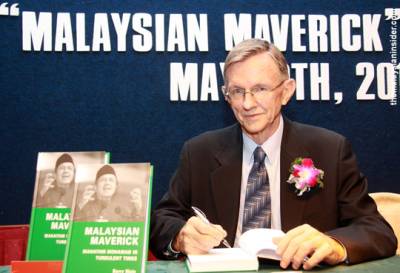
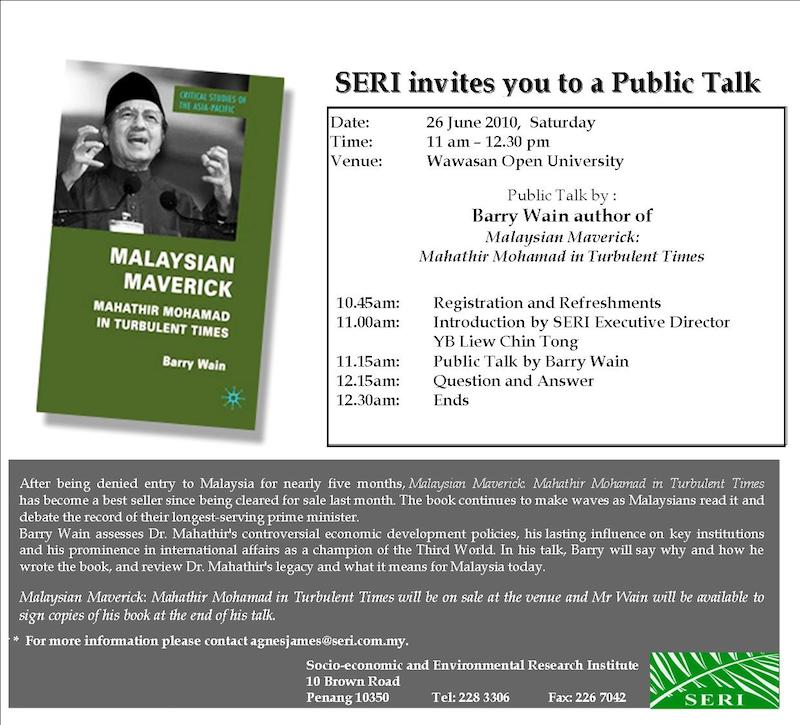
Is Mahathir a maverick, machiavellian in his ways or merely mainstream? That’s the question Maznah Mohamad poses in her review of Barry Wain’s book ‘Malaysian Maverick: Mahathir Mohamad in Turbulent Times’.


My first reaction to the book was, how could this be any different from the several others already written of the man, for example, that of Khoo Boo Teik’s Paradoxes of Mahathirism and  In-Won Hwang’s Personalised Politics (Not forgetting articles and commentaries generated by countless number of print and virtual writers before this)?

After going through the first few chapters of the book I knew that this was going to be different, more impactful and more of a fine strike at the core of the matter.

Mahathir has remained enigmatic and so far, seems to be unmoved by the tons of criticisms directed at  him. Perhaps this was balanced by the loads of adulation and fawning by his coterie of loyalists, as exemplified by the quality of the commentators in his own blog (which could number up to a 1,000 comments for a single post, with most starting their address with Yang dikasihi Tun – The Most Beloved Tun).

In gossip circles, Mahathir is known to have the thickest skin on the planet and is impervious to any verbal assaults on his character and his ways. People are astounded by his ability to trounce all of his rivals and those he simply could not tolerate even when he is out of power.

Mahathir is perhaps the only person in the world who could evoke sympathy on this by proclaiming that he was wronged by the wrong people he had chosen to be under him, from Musa Hitam to Abdullah Badawi. He survived at least five major financial scandals and still had the audacity to reprimand his heir-apparent Abdullah Badawi by sniping in one of his blog postings that Abdullah’s “Mr Clean image meant that he had cleaned everything up”.

The following had become standard facts, not just opinions — he destroyed the independence of the judiciary, manipulated democracy and controlled the media to his liking and is still able to say that he had been denied his freedom of expression by the Abdullah government. It appears that there is no remorse in the man, nothing can break him, and he remained confident right up to Barry Wain’s last line in the book that his wrongs would some day be debunked.

For those reasons above Mahathir Mohamad is a tale worth telling and re-telling. What I like most about this book is that it just tells the story as it is, rather than try to link the episodes to some abstract generalisation or grand theories. This makes the book richer because it does not straightjacket the reader’s thinking into a particular direction. The book charts the rise of Mahathir, his stepping down, small-steps, really because he was never a hair’s-breadth away from the centre of power.  

Style of book

The book is written in a breezy and enthralling style, at some parts it is almost like a political thriller and would make great material for a film of that genre. The most remarkable thing is that it is not fiction, and were a film to be made about Mahathir it would really be a case of art imitating life.

It is indeed an achievement that Wain’s book manages to focus on the personal, even heart-warming sides of  Mahathir, the family man, but ends up as a powerful treatise of the public Malaysia.

The party state

From 1981 till today, Mahathir has given Malaysia its particular feature as a state. The most useful, if not intriguing  concept that Wain has stated (just once on page 53) in describing Malaysia under Mahathir is that he had created a party-state. Hence, the useful contribution of the book is that it has provided much data to chart the birth of this party-state, its peaking and its possible eventual decline.

This concept of the party-state, though not elaborated by Wain, appears as the trademark of the Mahathir-rule.  Elsewhere, studies on the Kuomintang in Taiwan by Karl Fields have indicated the blurring of the distinction between party and state as leading to this particular phenomenon of the party-state. This would be a good time to undertake a comparative study of all the “party-states” of Asia – Umno, KMT, LDP and the PAP, to name the most outstanding ones.

I summarise Wain’s suggestion of this same phenomenon developing in Malaysia which quite clearly originated from Mahathir’s ascendance to power. They are associated with how he had:

•    weakened state and informal institutions
•    packed the state bureaucracy with loyalists rather than technocrats
•    intervened to subdue the judiciary so that it would yield results whenever the leader or the party’s political control is endangered.
•    downgraded the status of the MCA and the MIC, which were coalition party stalwarts of equal standing with Umno before this.
•    blended and merged Mahathir the strongman with Malaysia the rising middle-power state.

Malaysia was nothing but Mahathir, but Mahathir was larger than Malaysia. Not that he is unaware of this view as lately he had become quite defensive of his actions. In one of the more recent blog entries, he declared, “Thank you for agreeing that I am a dictator. Tell me which dictator ever resign. (sic)”

Important chapters   

Let me now try to excavate the more important insights and revelations from some chapters in the book.

I consider Chapters 3 to 6 to be the most crucial in charting the growth of the party-state helmed by a strong man.

Chapter 3 is especially critical. It showed how  Mahathir achieved his crowning moment in deploying his political and Machiavellian skills in saving himself and the party. The manoeuvre to outdo Tengku Razaleigh and the threat of a legal pronouncement that would spell the death knell for him and Umno provided the greatest motivation for him to upset the separation of powers doctrine of the modern democracy.

What was remarkable was that he resolved this issue in less than four months. The four months that shook Malaysia involved:
•    the pronouncement of  Umno’s illegality (February 1988)
•    the registration of Umno Baru
•    the ousting of Team B from the new Umno
•    the sacking of the Lord President (8 August 1988)
•    the sacking of five Supreme Court judges
•    the transfer of all assets of the old Umno to the new Umno (March 1988)
    
On 27 May 1988, Tun Salleh Abas, the Lord President was suspended from his office, by the then King Mahmood Iskandar.  This is the most intriguing revelation of the book, as Mahathir had managed to use his skills as a “blackmailer” to persuade the King to sign the letter of dismissal in return for protection from being removed from his throne. There were talks that the King was involved in the murder of his caddy, and was about to be dethroned by his fellow brother-rulers (The Council of Rulers).

Allegations of the killing of a caddy seemed to have been verified by both Mahathir and Anwar in Wain’s interviews with them.  These are mentioned in Chapter 3, page 73.

I must also add that Mahathir would not have succeeded in saving himself if not for the MCA, although this was not noted in the book. Apparently he owed a great debt of gratitude to Ling Liong Sik, who became the first Chinese to become leader of the Barisan National, a short history worth noting, but missing in Wain’s pages. In the midst of Umno’s deregistration, Ling Liong Sik as leader of the BN had the choice of accepting Tengku Razaleigh’s party (Semangat 46) or Mahathir’s party (Umno Baru) into the coalition.

In Mahathir’s blog entry of 23 November 2009 he expressed his emotions: “But for Liong Sik, the MCA President who headed BN, accepting Umno Baru and not Semangat 46, life would have been difficult for me.”

Hence a correction to Wain’s rendition — it may not have been Machiavellian deftness all the way which saved the strongman, but a little bit of goodwill had helped too!

Party and business

From the events of 1988, from which Umno Baru was birthed, the episode just spelled an uphill ascendance of Mahathir the astute autocrat – or perhaps  a downhill trajectory for Mahathir the scrupulous and ethical leader, as the other quarter would have seen it.

This is when the notion of the party-state could really take shape — Umno had to get into business and Umno had to undermine the state in order to replace the state with itself.

Wain’s book pointed out that under the Societies Act of 1966, the party was not permitted to do business. For this Umno had to conceal its assets by setting up nominee companies and executives and lined up trusted individuals to hold stakes in various companies, which were in fact Umno-owned.   

By 1988, Umno succeeded in accumulating vast amounts of resources under this arrangement. Chapter 5 seems to suggest that the registration and de-registration of Umno had originally put the party’s financial standing in a quandary. Here was where the wizardry of Daim Zainuddin came into the picture. The mix of politics and business towards Umno’s advantage would not have happened if not for Daim and his boys.

Before mixing politics with business, Umno was extremely poor. In an embarrassing detail, the book cited interviews with Tengku Razaleigh Hamzah as to how dependent Umno was on the MCA and Chinese businessmen to fund their election campaigns, including paying for routine expenses such as transport costs to talks to villagers.

But the involvement of Umno in business did not start with the Mahathir-Daim partnership. Way back in 1972, Tun Razak and Tengku Razaleigh created the secret, “Umno Political Fund”, which is discussed in chapter 5.  Ku Li defended this move about getting into business because of the need to be financially independent.

Umno’s involvement in business started with their acquisitions of newspaper shares, the first time of Utusan Melayu’s in 1961 and then in 1972 of the Singapore Straits Times’.

Daim came fully into the picture in 1982, a year after Mahathir had become PM and elevated his role in fashioning Umno as a giant corporation to great heights.

In Wain’s words, Daim “woud be primarily responsible for integrating business and politics in Malaysia”.  Accordingly, Mahathir merely made the “philosophical” connection rather than having a hands-on role in the whole matter.

In one of the  most classic defences of why Daim did not think that there was any conflict of interest between making money for himself, for the party and the nation, he declared a series of “why-nots”,

“If I think the government can make money with me, why not?…since I have details of the company and I think it is good investment for my family, why not?… If everybody is going to make money, why not?” (pages 133 – 134)

Chapter 6 titled, “Scandal, What Scandal?” is also a fascinating, if not troubling read. In this chapter, Wain revisits Malaysia’s past financial scandals by presenting them as a series of Mahathir failures. From the mid-1980s till the late 1990s, this was the decade of serial failures for Mahathir. Financially, he was a serial failure.

The events and background of the tin trading fiasco, the BMF affair, the forex trashing and the Perwaja mess were all skilfully traced in this chapter. The conservative estimate of the worth of these failures was RM100 billion. What is useful about this chapter is not that any of these shenanigans had not been exposed before, but having them all documented together in one read allows one to discern a certain pattern of the party state.

Mahathir lamely claimed to have been misinformed about many of the dealings, or that he was not fully culpable of the acts, by justifying that:
•    he  needed to rescue the faltering party from financial ruin (Maybank and BBMB ended  up paying for the costs of Umno’s Headquarters);
•    Umno needed to be involved in business as a means of creating the new Bumiputra entrepreneurial class, basically in the form of Daim and his boys;
•    Malaysia needed to stand up against the West –”to take on the developed countries at their own gains”. For example the tin and forex trading misadventures were manoeuvres to outfox the Western economies.

Besides the unsuccessful plan to outdo the West, all that the above had succeeded in generating was endemic and appalling corruption within the system. The masterminds behind the BMF and Perwaja affairs  remained unpunished. To date nobody has ever been prosecuted under Malaysian laws for any of the above misappropriations.

Chapter 7 is about Mahathir’s penchant for big projects and colossal structures. But by the time he had built Putrajaya, the new administrative capital, he was already on his last legs as premier – the swan song before exit.

Chapter 8 is another invaluable chapter as it describes in great detail how Mahathir tamed the Malay Royalty by getting rid of their judicial immunity. The amendment to the federal Constitution allowed for a sultan to be tried in a “special court” if caught breaking the law. Another change was to get rid of the constitutional provision which prohibited any member of Parliament or of the state assembly  from saying anything about the King or sultans without being liable to proceedings in court. But in looking at the current situations involving Umno and the royalty – in Terengganu, Perlis and Perak –  it doesn’t look like the amendments have much bite in preventing royal intervention and meddling.

Chapter 9 is about Mahathir’s  use of pragmatic Islam to shore up his credentials, which in the end he had little control over. Chapter 10 is about his performance on the foreign relations stage. I would say that he was most successful in his Third World persona, admired by outsiders as the champion of the Southern underdogs. But even so he did not go the full mile in resisting the West, as he was quite easily persuaded into supporting many unpopular resolutions such as the one which approved the invasion of Iraq in 1990; he even worked hard under questionable circumstances to get a meeting with Bush in 2002.

While the book is an excellent account of events from a vantage point of having Mahathir as the central, arresting  character of the plot, the picture of Malaysia is not complete without considering bit players and marginal actors. In this regard Wain’s book says little about the involvement of civil society or even Mahathir’s detractors in being responsible for many of his reactions and backlashes. Nevertheless, Wain has featured DAP leader Lim Kit Siang prominently as the most consistent admonisher of Mahathir’s wrongdoings and transgressions. Almost every chapter features Kit Siang’s parliamentary dressing-down of the Mahathir malpractice. I would think that another book on the former would be a welcome addition to the list of political biographies of Malaysian leaders.

Platform for other theories and generalisations

There are many ways of looking at history. One way is to have all analysis centred around one person, which Barry Wain had expertly done. But the other way is to look at the entity in which this person operates from a larger, long-duree perspective which is to look at transformational moments rather than emblematic personalities. Looking at history this way I could view Malaysia differently. For example what were the iconic moments in Malaysia’s transformation?

My take is that there were three:

•  1969 – not just because of the riots but because it triggered a structural revolution in the form of the NEP for Malaysia. This changed race-relations and entrenched Malay dominance as the foundational politics of Malaysia.

•  1982 – this marked the take-off stage of state Islamisation in Malaysia.  Anwar’s entry into government provided the wide discourse of Islam in government and private lives. Umno began to build on Islam for its legitimacy not because the party became more Islamic but because the state was made to perform that role and carry on such an image. This may have masked all the financial scandals and mismanagement by diverting the Muslim masses’ concern onto other seemingly transcendental issues.

•  2008 – the 12th General Election was iconic for several reasons; it was  only the second time  that the BN lost its two thirds majority and it was the first time that all opposition parties succeeded in becoming governments – Pas in Kelantan and Kedah, the DAP in Penang and the PKR in Selangor.

If we were to look at all of the above moments, where was Mahathir in all these? Surprisingly he was not the main actor or the primary mover of these moments. 1969 and the NEP were Razak’s moments, with Mahathir a bit player with his Malay Dilemma needlings.

1982 was Anwar’s moment with Mahathir playing a role in getting him into the party though Mahathir was not at all central in the Islamic resurgence movement.

In 2008, Anwar and Malaysian civil society (Raja Petra and the internet come to mind) were the main players and galvanisers of that event.

Mahathir may be here, there and everywhere. But all the time he was in fact fighting for regime-maintenance, as asserted by In-Won Hwang in a previous work on Mahathir titled,  Personalised Politics. Mahathir was full of grand visions according to Khoo Khay Jin in an earlier article, written in the 1980s.  But by Mahathir’s own admittance he failed in reforming Umno or the Malays. Was he then too afraid of going against the status-quo?

Let me just conclude by posing more questions than can be answered about the subject matter of the book:
•    Was he a failure or a success as a leader? Many of his legacies today are leading to a lacklustre rather than a brighter Malaysia. 
•    Was he a maverick or a mainstreamer? He was more obsessed about saving and functioning within Umno, unable to discard neither the content nor the shell of the party.

If Anwar had succeeded in inheriting the position of prime minister, would he have continued the Umno legacy of the party-state and party capitalism? Could it be that even Mahathir was cornered into ridding Anwar, lest Umno would cease to be the party-state?

Stirrer or shaker?

My own conclusion is that Mahathir had stirred many events but he did not shake the system; a provoker of headline news, not a wrecker of vestiges and structures.

Despite the seemingly iconoclastic and non-conformist positions and posturing that he took,  how much of the world or Malaysia did he change?

The fact that I find myself asking these questions attests to the valuable contribution of this book and I’m very sure that it will fly off the shelves for many reasons, not least because it is a riveting, thought-provoking, if not disquieting read.

For journalists and scholars, Mahathir’s paradoxes will continue to serve as a veritable textual goldmine in the production of more papers and books.

To the Malaysian citizen and taxpayer, this book is a sobering testament that you almost always do not get the government you deserve.

Dr Maznah Mohamad, an Aliran member, presented the above commentary of Barry Wain’s Malaysian Maverick: Mahathir Mohamad in Turbulent Times, published in 2009 by Palgrave Macmillan, at the book launch in Singapore on 4 December 2009.

Home  2010  2010: 2

20102010: 2

Mahathir: Maverick, machiavellian or merely mainstream?

By


-

1 May 2010

0

458

Why Mahathir’s cronyism is worse than corruption

Why Mahathir’s cronyism is worse than corruption

By Sebastian Loh

Last December, a friend working in Singapore asked me why I’m voting for Najib Razak over Mahathir Mohamad.

He said, “Yes, Mahathir practiced cronyism, but at least he didn’t steal like Najib.” Surprised, I told him, “Whoa, there. I don’t think you understand how cronyism exactly works. Mahathir-style cronyism, in particular, is much, much worse than standard corruption.”

Don’t agree? I’ll illustrate what I mean by way of a simple story.

Let’s say you’re a 25-year-old just starting work in 1998. You have to buy a car because Mahathir is obsessed with Proton and can’t be bothered with public transportation.

You can’t afford a foreign car because Mahathir’s tariffs make them too expensive – you’d be paying two, three, four times above the actual market price. So, you take a loan and grudgingly buy a Proton – a truly crappy, substandard vehicle that’s also overpriced because there’s little competition.

Proton, Mahathir’s infamous baby, happily takes your money and hands part of it to crony suppliers who sells automotive parts to the company at above-market rates. Score one for cronies. But wait, that’s just the beginning.

Having a car is convenient, but now you have pay road tolls on a regular basis. Mahathir signed outlandishly lopsided agreements in favour of crony highway operators.

Many highways, including the North-South Expressway, were originally slated to see their toll fees increase by 10% every three years. Ten percent, my friend. And there was little the government could do – if it didn’t allow for the fee rise, it had to pay massive compensation to the highway operators.

Either way, score two for cronies. And guess who publicly defended toll fees in Malaysia just a few months ago? Yup, the 93-year-old Father of Tolls himself. I’m not surprised at all.

Let’s say you get fed-up with driving and tolls lah. You decide to take the LRT or the bus. Who owned the LRT lines back in 1998 before they were (predictably) bailed out? Crony companies. Who owned the Intrakota bus line back in 1998 before it was also bailed out? Another crony company.

Again, your money goes into the pockets of cronies. And as you’ve seen, even if crony companies bungkus, the Mahathir government will step in and rescue their behinds with taxpayer money. Score three, score four, and score five for cronies.

You aren’t safe from Mahathir’s cronies even if you take a cab. We often complain that cab drivers are dishonest – they refuse to use their meters and demand outrageous fares for short rides. (I can’t recall how many times I’ve been asked for RM20-RM30 for a 10-minute ride.)

But can we really blame them? They need to keep paying for absurdly expensive taxi permits issued by crony cab companies. The cronies prey on them and so they prey on us lah. At the end of the day, score six for cronies.

It’s worth noting that Mahathir recently claimed that Grab was hurting cab drivers. He promised to review the e-hailing services legalised by Najib if Pakatan Harapan comes to power. But who benefits from such a review but crony cab companies?

I take Grab daily and I can tell you that I couldn’t be happier with the service. Why should the average consumer continue bankrolling crony cab companies who can’t compete in terms of cost, convenience, and service?

That’s the thing with Mahathir. He can’t (or won’t) back away from the massive ecosystem of cronyism that he created. Call it the ‘Crony Industrial Complex’: Mahathirism means that there’s always a crony hiding around the corner waiting to beat you up and steal your money.

And we have only focused on something as basic as commuting/transportation (getting to work and back). We haven’t even explored the other sectors of the economy and national infrastructure that Mahathir carted off to cronies.

You may ask (as you obviously will), but what about 1MDB? Okay, fair question. Even if the allegations against Najib are true (and at this point of time, he hasn’t been charged by any authority despite there being multiple international investigations into 1MDB), how much has 1MDB actually cost the country? Just RM1 million. That’s the seed capital that federal government gave 1MDB at the start.

1MDB raised the rest of its funds by borrowing like a mad man. Granted that was incredibly stupid and reckless, the government’s exposure to the scandal-hit fund is quite minimal.

The government did provide a RM950 million loan to 1MDB, but that’s already paid back in full. Moreover, 1MDB continues to make its debt payments on time (it has lots of assets to sell and monetise). So, what’s the big deal here? Especially when the shadows of Mahathir’s cronies loom much larger in our day-to-day lives.

When you pay 6% GST today, you’re not paying a single sen for 1MDB. But if you’re a road user (like most Malaysians), you are paying for Mahathir’s tolls. Chances are you also paid way too much for your car thanks to Mahathir’s Proton.

How much does all that cost you in the end? Tens of thousands? Over a course of a lifetime, hundreds of thousands? Perhaps millions?

Has anything changed today? Consider the following:

Do you think Proton’s crony suppliers were happy when Najib refused to give more unconditional aid to Proton? Do you think they were happy when Pak Lah and now Najib allowed more foreign cars into the country?

Mahathir for sure wasn’t happy – he publicly complained about cheap imported cars outcompeting his beloved Proton. Are you, dear reader, unhappy about CHEAP imported cars? I’m not! I’m 100% on the side of consumers.

Do you think cronies are happy that highway operator PLUS is now controlled by the government? Since Khazanah and EPF bought PLUS in 2010, popular highways like the North-South Expressway, the Penang Bridge, and the Second Link have not seen even a single rise in toll fees.

Do you think cronies were happy when Najib kept the MRT project within government-owned Prasarana instead of handing it over to private companies?

Do you think they were happy when work on the MRT was awarded via an anonymous tender system?

I can imagine them gathering around a smoky table somewhere and lamenting, “Aiya, how to cari makan like that?”

Do you think crony cab companies were happy when Najib legalised e-hailing services? Do you think they’re happy that Grab is grabbing their business and ending their dominance of the cab industry?

Now, there are plenty of rich businessmen supporting Mahathir’s campaign to be PM again. These are the people who Mahathir regularly claims are being harassed by tax authorities.

Do you think these shadowy, yet unnamed businessmen are supporting Mahathir out of pure love for the country? Or do you think they want something in return? C’mon lah. Kawan-kawan sekalian, this is politics. There is no free lunch.

So, I told my friend: Cronies rindu Zaman Tun the most because that’s when they could rob all us blind. Back then, a select group of businessmen dominated virtually all sectors of the economy, resulting in the indirect and systemic extortion of the rakyat’s money.

Like I showed earlier, you can’t run from Mahathir’s cronies even if you tried. And that’s way, way worse than anything that one company like 1MDB has done to us.

In the end, I have no choice but to support the current BN government under Najib – flawed as it is – because it at least has made important progress in fighting this sort of outrageous cronyism.

You’re not going to get that with gang Mahathir. My friend acknowledged that I had a point, but was still very skeptical about BN. And that’s fine, I just gave him my honest opinion.

To me, the choice we face this election couldn’t be clearer.

Sebastian Loh is an FMT reader.

The views expressed are those of the author and do not necessarily reflect those of FMT.

Sunday, 19 May 2019

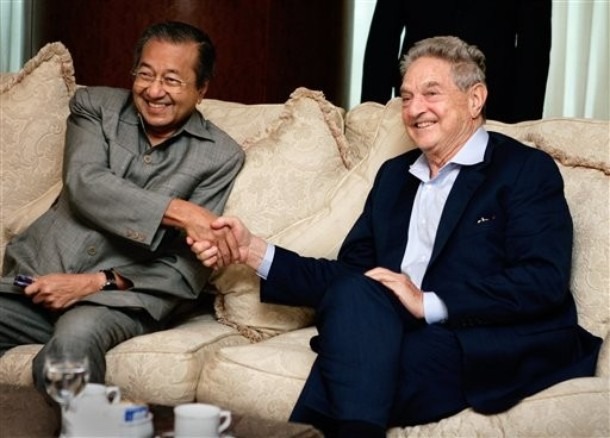
George Soros Called Mahathir A Corrupt Moron

George Soros Called Mahathir A Corrupt Moron

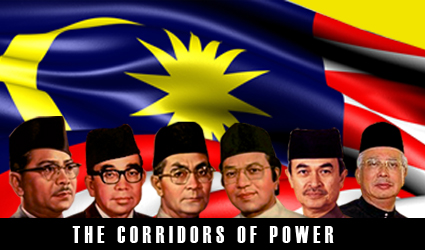
CORRIDORS OF POWER

By MT Webmaster Last updated Jun 25, 2017

1.4kShares

 Share


“Your 3 sons are worth US$8 billion. Where do they get this money? Of course, corruption. You have more foolishness than most people would believe. Billions are used to build two high rise Petronas buildings that benefit nobody. They now stand tall, a symbol of stupidity and irresponsibility. And the bridge from Malacca to Sumatra across international waters? Why not build a bridge to the moon? I am sure you still can get your 20%.” – George Soros

THE CORRIDORS OF POWER

Raja Petra Kamarudin

Mahathir: memang saya suka makan suap

On 14th March 2015, Free Malaysia Today wrote:

Dr M should start by replying to one of his most vocal critics – hedge fund manager George Soros – who outlined a very long list of the former PM’s wrongdoings in an article published in The Bangkok Post in 2012. Soros has made his opinion of Dr M clear. “Your 3 sons are worth US$8 billion. Where do they get this money? Of course, corruption.”

“You are known as the Marcos of Malaysia, having enriched yourself to the tune of billions.”

“You have more foolishness than most people would believe. Billions are used to build two high rise Petronas buildings that benefit nobody. They now stand tall, a symbol of stupidity and irresponsibility.

“What is this reclamation of 10 islands off Kedah? Totally absurd and stupid. Of course your benefit is 20%.”

“And the bridge from Malacca to Sumatra across international waters? Why not build a bridge to the moon? I am sure you still can get your 20%.”

“You called me a moron. How can a moron make so much money? By allowing short selling and borrowing millions of shares from your banks, we fund managers made millions out of your inexperience and poor regulations.”

“You lose all Malaysians’ money, therefore you are the moron.”

Soros called Mahathir a corrupt moron

And then there’s Barry Wain, former editor of the Asian Wall Street Journal and a Writer-in-Residence at the Institute of Southeast Asian Studies in Singapore.

The Australian journalist, who has lived in Asia for 40 odd years, wrote in his 2009 book ‘Malaysian Maverick: Mahathir Mohamad in Turbulent Times’ that Dr M had wasted RM100 billion during his tenure as PM.

Wain wrote that most of the scams, which included a government attempt to manipulate the international tin price and gambling by Bank Negara on global currency markets, occurred in the 1980s.

Wain also wrote that Dr M used a secret fund of his ruling UMNO to turn the party into a vast conglomerate with investments that spanned almost the entire economy. All these are serious accusations which need to be answered by Dr M, who has so far just dismissed them with bare denials.

Since he expects the current administration to come clean with detailed answers to what’s happening with 1MDB, is Dr M ready to do the same for accusations still outstanding against him?

Barry Wain accused Mahathir of wasting hundreds of billions of Malaysian taxpayers’ money

Ezam Mohd Nor said he has six boxes of evidence regarding Mahathir’s corrupt acts — so Mahathir silenced Ezam by bringing him into his party

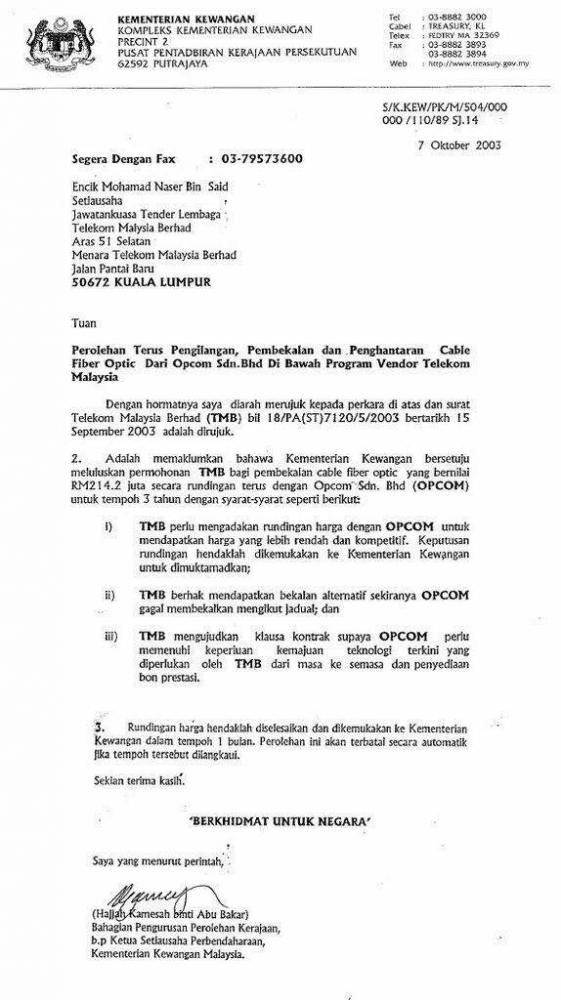
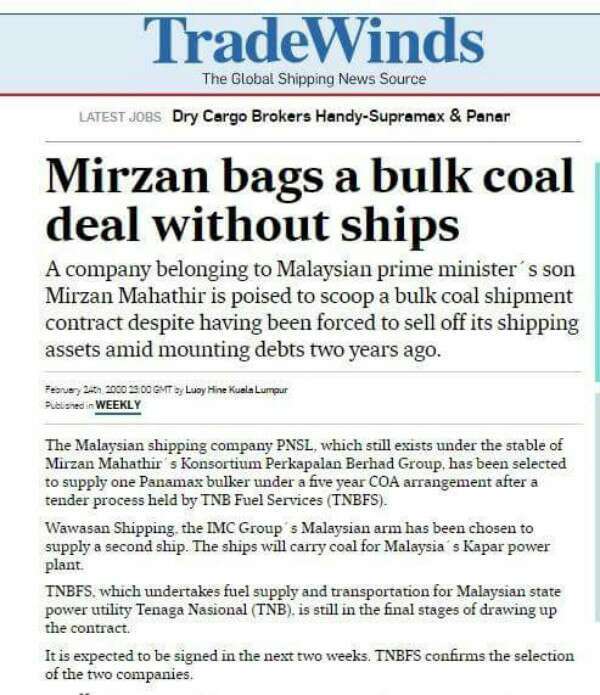
Just before Mahathir left office on 31st October 2003 he awarded a huge government contract to his son’s company

Mahathir helped create a number of Malaysian tycoons but most are actually his proxies and nominees

Is there any tangible proof that Dr. Mahathir is corrupt? Rafidah Revealed That Mahathir Is Corrupt

Rafidah Revealed That Mahathir Is Corrupt

More importantly, Mahathir says there is no evidence of him ever committing a corrupt act. But then there is. There is a document that proves Rafidah, the Minister of Trade and Industry, approved shares to Mahathir’s son on the specific instructions of Mahathir himself. And this document was revealed on 6th November 1999 during a press conference at PKR’s party headquarters in Menara Phileo Damansara.  

THE CORRIDORS OF POWER

Raja Petra Kamarudin

Rafidah Aziz is Tun Dr Mahathir Mohamad’s greatest ally. When on 22nd June 2002 Mahathir announced he was resigning, Rafidah leaped to her feet, broke the heel of her high-heel shoes, and ran bawling and wailing to Mahathir to persuade him to stay on.

Anyway, one-and-a-half months later, on 7th August 2002, the then PKR Youth Leader, Mohd Ezam Mohd Nor, was sentenced to two years jail for violating the Official Secrets Act (READ THE NEWS ITEM BELOW).

“What are we going to do without you?” screamed Rafidah with tears flowing because she had just broken the heel of her Jimmy Choo shoes

What many may have forgotten, or did not know, is that Ezam held a press conference on 6th November 1999 at the PKR (then called PKN) party headquarters in Menara Phileo Damansara. During that press conference, Ezam showed the reporters a document that was protected under the Official Secrets Act (OSA). Just like in the case of Rafizi Ramli, Ezam thought he was playing the role of whistleblower whereas he was actually committing a crime under the OSA.

Ezam exposed Mahathir’s and Rafidah’s corruption and went to jail for two years

The document that Ezam showed the reporters was the Minutes of the Meeting held in the Ministry of Trade and Industry, which Rafidah Aziz, as Minister, chaired. The meeting was about the allocation of shares and amongst those names on the list of shares to be approved was the name of Rafidah’s son-in-law.

Rafidah was accused of conflict of interest, or maybe even corruption, for chairing a meeting to allocate shares to her own son-in-law. Rafidah, however, argued that while she did chair the meeting, when the committee discussed the allocation of shares to her son-in-law, she left the room and came back only after the committee had finished discussing the matter.

Since Rafidah was the chairperson of the meeting, surely the committee would be intimidated and would not dare reject the shares to her son-in-law although she stepped out for a brief moment? After all, she is not known as the ‘Iron Lady’ for nothing. We used to joke that Rafidah regrets being born a woman or else she and not Mahathir would have been the Prime Minister.

Rafidah, the ‘AP Queen’, said Mahathir asked her to approve shares to his son

Rafidah should not have chaired that meeting at all instead of stepping out only when the committee discussed the approval of shares to her son-in-law. Rafidah, however, defended her actions by saying that she was forced to chair that meeting because the committee was also discussing the approval of shares to Mahathir’s son and Mahathir had instructed her to make sure that the committee approved those shares to his son.

In short, Mahathir had told Rafidah to make sure that the shares to his son is approved. So Rafidah was forced to chair the meeting to make sure the committee approves the shares to his son. And the Minutes of the Committee Meeting approving the shares to Mahathir’s son and Rafidah’s son-in-law were revealed by Ezam during the 6th November 1999 press conference at the party headquarters in Menara Phileo Damansara. And because of that, on 7th August 2002, Ezam was sentenced to two years jail.

Ezam said he is a mere whistleblower. Ezam said Mahathir and Rafidah should both be arrested and should be sent to jail for corruption. Malaysia’s laws, however, say that Ezam is not a whistleblower but instead broke the law under the OSA. And Ezam, instead, was sent to jail for two years.

Mahathir used threats of jail against those who opposed him or those who exposed his wrongdoings

And these are laws that existed at the time when Mahathir was Prime Minister and Anwar Ibrahim the Deputy Prime Minister. In fact, the law is called the Official Secrets Act 1972 (Akta Rahsia Rasmi 1972).

In 1972, Tun Razak Hussein was the Prime Minister. When Tun Hussein Onn took over in 1976 he did not repeal the OSA. The same thing happened when Mahathir took over in 1981 and when Tun Abdullah Ahmad Badawi took over in 2003. Anwar also did not complain about the OSA when he joined the government in 1982 or when he became the Deputy Prime Minister in 1993.

More importantly, Mahathir says there is no evidence of him ever committing a corrupt act. But then there is. There is a document that proves Rafidah, the Minister of Trade and Industry, approved shares to Mahathir’s son on the specific instructions of Mahathir himself. And this document was revealed on 6th November 1999 during a press conference at PKR’s party headquarters in Menara Phileo Damansara.

*********************************************************

Ezam slapped with two-year jail term for violating OSA

Malaysiakini, 7 Aug 2002

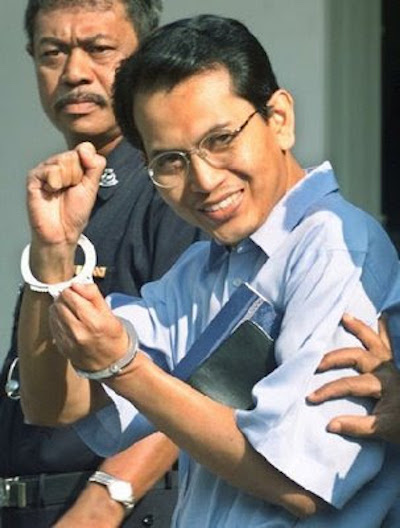
Keadilan Youth chief Mohd Ezam Mohd Nor was sentenced to two years’ jail by the Petaling Jaya Sessions Court today after being found guilty of committing an offence under the Official Secrets Act.

Sessions court judge Wan Afrah Wan Ismail said the punishment meted out was appropriate and in the interest of the public.

She added that Ezam’s defence team, comprising Zainur Zakari and Raja Aziz Addrusse, failed to prove that the accused did not contravene the OSA.

“After hearing the evidence of the accused and the witnesses and the submission by the two parties the court finds that the accused failed to show reasonable doubt in his charges.

“The accused in his defence admitted to having a press conference on Nov 6, 1999 to expose the corruption and abuse of power by International Trade and Industry minister Rafidah Aziz and former Melaka chief minister Rahim Thamby Chik and he knew and was sure that those documents were official secrets but still took the risk,” said the judge.

Mahathir used Rafidah to approve shares to his sons

Ezam was charged under Section 8(1) of the OSA and carries a mandatory jail sentence of not less than one year and not more than seven. He is to serve the two-year sentence at the Kajang prison.

The Keadilan leader, who is currently undergoing a two-year Internal Security Act detention at the Kamunting Detention Centre in Perak, remained calm when the sentence was read out.

Ezam and five others were detained under the security law last year for allegedly planning to overthrow the government through militant means, a charge which they have denied.

Speaking to reporters later, the deputy public prosecutor Vong Poh Fah said Ezam will be sent to the Kajang prison to serve his sentence.

“As for his detention under the ISA in Kamunting, we are still awaiting instructions from the Home Ministry,” said Vong.

At the end of the trial, Ezam was allowed to meet his family for an hour before being taken away. His children, Tihani, 9, Mohd Hasif, 5 and Mohd Haris, 4, held placards which read, “Our father is a hero and we love you”.

Courtroom scuffle

Meanwhile, a scuffle erupted inside the courtroom between police personnel and Ezam’s supporters when they attempted to hug him after the verdict was read.

Ezam’s spectacles was broken in the commotion. However, no arrests were made.

The supporters also jeered at the judge calling her ‘evil and unjust’, and refused to stand when she entered and exited the room.

Earlier when mitigating the sentence, Vong said there had been no strong mitigation shown by Ezam’s counsel and it was clear he had plans to expose the documents.

Ezam was alleged to have leaked the Anti-Corruption Agency’s investigation papers regarding the two politicians during a press conference at the Keadilan headquarters in Menara Phileo Damansara. He claimed trial two months later on Jan 14, 2000.

“He was not repentant even in his testimony and took the opportunity to hurl accusations against certain quarters.

“As the leader of a political party he should have adhered to the laws of the country and thus should be given the harshest punishment,” said Vong.

Ezam’s counsel, Zainur replied that it was the responsibility of a good citizen to show the wrongdoing of the government.

“Also the information contained in the documents have already been debated in Parliament and were publicised in the press,” he said.

Ezam to appeal

About 100-odd supporters gathered outside the courthouse and began chanting ‘reformasi’ and ‘ Allahuakhbar ‘ (God is great) when Ezam emerged from the building.

More than 50 Federal Reserve Unit and other police personnel stood watch while a water-cannon truck was also stationed nearby.

Also present at the hearing were Keadilan president Dr Wan Azizah Wan Ismail and other party leaders, DAP chairperson Lim Kit Siang and PAS leader Mohammad Sabu.

According to his lawyer, Ezam will file an appeal soon

Mahathir –A Malay Leader of Paradoxes and Contradictions

Mahathir –A Malay Leader of Paradoxes and Contradictions


6 Votes


December 25, 2016

Mahathir –A Malay Leader of Paradoxes and Contradictions

S. Thayaparan@www.malaysiakini.com

“I’m a realist, I do what I can do, if I can’t do, I don’t.”

– De facto opposition leader Dr Mahathir Mohamad


What if I said that Malays have a lazy, rent-seeking culture, relying on political and social influence to gain wealth and unable to retain power despite all their special privileges? Would this be wrong? Would this be racist? Would this be seditious?

How about if former Prime Minister and now de facto opposition leader Dr Mahathir Mohamad said this? Would it still be “racist”? Would this be considered some sort of truth telling? Would it make a difference when he said this last week or when he was prime minister of this country?

More than a decade ago, in an UMNO General Assembly speech –Amanat Presiden (which also coincided with a celebration of sorts – 21 years in office), the former prime minister engaged in some “realist” assessment of the Malay community he had led for over two decades.

As reported by Malaysiakini, he claimed – “If today they (Malays) are colonised, there is no guarantee they will have the capacity to oppose the colonialists.”

The Ex-Premier said Malays had failed because they were lazy and sought the easy way out by reselling their shares, licences and contracts to non-Malays.

“They cannot be patient, cannot wait a little, they want to be rich this very moment… no work is done other than to be close to people with influence and authority in order to get something,After selling and getting the cash, they come back to ask for more,”” he said.

Therefore, there is a rather bizarre logic in his thinking when he said that he had no regrets about stifling dissent in young Malay people during his tenure. Bizarre because the former prime minister has never been afraid of using the stereotype of the Malay community as a means of galvanising support.

And this extends to the other communities as well. Well by “others”, I really mean the Chinese community because as we all know the Indian community is absent from the discourse. In the same speech at the 2002 UMNO General Assembly, he also referenced the Chinese community – the very community that UMNO has always demonised as a threat to Malay hegemony but in reality, meant they were perceived as a threat against UMNO hegemony.

He said, “If we take out the Chinese and all that they have built and own, there will be no small or big towns in Malaysia, there will be no business and industry, there will be no funds for the subsidies, support and facilities for the Malays. Learn from the Chinese.”

Only Mahathir could balance such contradictions, playing the racial card against communities, including the one UMNO claims to represent. Which is why in Mahathir’s thinking there is really no reason why he should not be standing shoulder to shoulder with his former opponents in an attempt to bring down the Najib Abdul Razak regime.

He really does not care what political pundits, who seek to remind people of what he did during his tenure, say because he knows that he then enjoyed the support of the majority of Malaysians and he did this using the kind of realpolitik that oppositional parties during his regime did not grasp or were uninterested in learning.

While some opposition supporters blather on about “truth and conscience” but offer no real evidence that these form the desideratum for oppositional forces in this country, the former Prime Minister has no problem twisting the facts on the ground or contorting social and economic realities to fit his narratives.

A clear example of this would be when in an interview, he acknowledged that discrimination was part of the system but that there were communities who thrived in spite of it – “The Chinese in Malaysia have no special rights, they experience discrimination. But they are more successful than us.”

This is exactly the system a Gerakan political operative was talking about when he mocked the opposition for subscribing to the same system as BN. And the same kind of thinking that for years sustained BN which led to the creation of the leviathan which in the Najib regime. We get the world we deserve.

Slaying sacred cows

And please keep in mind that during Mahathir’s tenure, UMNO defined oppositional racial preoccupations because the slaying of UMNO sacred cows were the very definition (and still is) of any kind of egalitarian agenda that would truly “save Malaysia”. All those other so-called racial preoccupations, religious, social and economic are a direct result of the UMNO agenda and the mendacious ‘social contract’.

However, since the short-term goal of saving Malaysia means removing Najib, the real powerbrokers, those invested in the system – and they are not only Malays – would like to keep the gravy train moving, only with a different railroad engineer.

Unlike some oppositional voices who pontificate about “principles” or at least attempt to control the discourse, demonising those who dredge up so-called ancient history and engaging in victimhood to facilitate political expediency, the former prime minister is clear about the purpose of his alliance with the oppositional forces in this country.

As he told me when I brought up the trust deficit when it comes to opposition supporters and his new role as oppositional leader – “If Najib is there, the opposition will suffer. If Najib is there, even UMNO will suffer, the whole country will suffer. I think the opposition is not supporting me, they are interested in removing Najib. I have the same interest. It is okay to work together – only on that issue, not on other issues.”

Furthermore, he has had no problems claiming that he would slay Malay sacred cows for the benefit of the community – “I cannot predict how much longer this (affirmative action) will go on but at the moment, we are trying out… some kind of experiment… by withdrawing some of the protection in education,” he said. “We want to see whether they will be able to withstand the competition or not. Obviously if they prove themselves able to, we can think of reducing further some of the protection.”

This was always the stick component of the carrot-and-stick approach, and the former prime minster knew very well that affirmative action programmes had a deleterious effect on the Malay community.

Moreover, when he hinted that he would slay sacred cows, he was greeted with rapturous applause as some sort of truth sayer by the very same UMNO who now endorse the Najib regime’s attempt to further consolidate power and engage with Mahathir’s sworn enemy, PAS.

But of course, now that the Malay community is fractured and the Malay opposition needs to reassure the Malay community, all those special privileges, all those affirmative action programmes, everything that the former Prime Minister said was holding back the Malay community, are off the table.

The only thing that discerning Malaysians have to take away from any of this is that Mahathir acknowledges that he failed to change the Malay community – “What else (can I do) … I have tried to be an example, tried to teach, scolded, cried and even prayed. (But) I have failed. I have failed to achieve the most important thing – how to change the Malays.”

The Question we must ask ourselves–Does Mahathir what he says?

When asked if there was anything he would do differently, he claimed that he wanted to be a “normal” UMNO member because he could not do anything for the Malays. Well, he is not even a member now and he is the power behind a nascent Malay power structure.

The big question is, will he fail again. More importantly, is changing the Malays really the agenda of the game for him or anyone else.


Saturday, 18 May 2019

Mahathir is a hypocrite


LETTER

Mahathir is a hypocrite

Anwar Dahlan  |  Published:   |  Modified: 


After Dr Mahathir Mohamad's latest salvo calling for the resignation of the prime minister, not much can be certain about Mahathir anymore. This is especially so given that the reasons for calling on Abdullah Ahmad Badawi to step down are premised on the inability of the government to break international law and build a crooked bridge.

However, despite the fact that Mahathir's ranting expose serious doubts about who he actually is, there are two things that emerge as definite certainties as far as the public is concerned. One, that he has served as Malaysia's prime minister for just over 22 years and two, that Mahathir is a true hypocrite.

From an endless source of examples of his hypocrisy and double standards that many, many others have pointed out, I choose two. The first is the fact that he closed down national newspapers and approved of the takeover of media companies by BN parties yet now he complains about the lack of press freedom.

The second is that he forced Petronas to save his son's failing consortium to the tune of RM1.7 billion yet now he repeatedly asks for explanations about how the current Umno Youth deputy head could persuade his business colleagues to lend him under RM10 million.

Now we know that Malaysians are very forgiving. Most ordinary Malaysians know for a fact that Mahathir is a hypocrite and that he has committed many wrongs and injustices during his time in office. However, there is an implicit feeling amongst most of us that he has realised his previous shortcomings and therefore can be a credible champion to fight against the government.

A crucial issue the rakyat has to be aware of, before crowning Mahathir as champion of democracy, etc, is what motivates a hypocrite or in other words, what is Tun's agenda? To answer this, we must turn to the other fact we know about Mahathir, apart from him being a shameless hypocrite, and this is that he was prime minister of Malaysia for 22 years.

Like any strongman ruler, Mahathir is worried about the things that are beyond his control. Chief among this is his legacy as prime minister and how generations to come will remember him. His own mortality assures that there will be a time when he cannot continue to shape his legacy via personally encouraged propaganda.

Indeed, his legacy is also why he chose Abdullah Ahmad Badawi as PM. Mahathir was under the impression that Abdullah would loyally and unquestioningly continue to implement Mahathir Mohamad policies and therefore cement Mahathir's legacy. Again, like any strongman leader, Mahathir assumed he knew best and refused to acknowledge that Malaysia's challenges were rapidly changing, therefore demanding urgent and necessary reforms.

Imagine then Mahathir's anger, when after listening to the views of ordinary people and various groups, Abdullah decided to fight a general election on issues centring on corruption and inequality besides a shift away from mega-projects. Now, imagine Mahathir's extreme bitterness when the people responded with such enthusiasm and hope.

Abdullah won a majority that Mahathir was never able to accomplish over the course of the five general elections he contested as leader of the BN. The key fact here is that Abdullah's victory was based on a set of specific relevant principles that contradicted much of Mahathir's policy priorities.

Everywhere, Mahathir's questionable legacy of 22 years is under attack. The only thing anyone can say about Mahathir's policy was that he personally devised them. Therefore, in light of Mahathir's re-emergence, it can be argued that the writing has always been on the wall. The more Abdullah pushes on with his reform agenda addressing the tragic mistakes of Mahathirism one by one, the more Mahathir will be pushed into a corner.

The more he is pushed into a corner, the louder he will become. Just look at how far Mahathir has gone, from mere grumbling about Proton disregarding his beloved Mahaleel, to the present, where he has clearly called for Abdullah's resignation. It is a sign of a desperate man, willing to sacrifice the country's political stability in pursuit of his fabricated place in history.

Mahathir will not rest easy until someone else is in power, someone else who will definitively ensure him a proud legacy which ignores the facts but builds on propaganda. It won't come as a surprise to anyone if Tun's next step is to mobilise the more corrupt and sidelined elements in Umno to mount a challenge against Abdullah's reform agenda.

Malaysians will realise in their own time - but they nevertheless will realise - that dismantling the systems that structurally integrated corruption and inequality into Malaysian society over the course of 22 long years will take Abdullah Ahmad Badawi more than one or two terms as prime minister to overcome.

It will take as long as it takes because it has to be done. Failure to change, in terms of how we think about progress and development in the 21st century, will simply mean that we will all be left behind while others surge ahead. We will then have nothing but Mahathir's actual legacy, of being a democracy without being democratic and of a 'spend-spend-spend' approach to economic growth, to sink us in even deeper.

Khaled: Hypocritical of Dr Mahathir to cite Western media

Khaled: Hypocritical of Dr Mahathir to cite Western media

PETALING JAYA: Johor Menteri Besar Mohamed Khaled Nordin has questioned Dr Mahathir Mohamad’s hypocrisy in citing foreign reports about Malaysia.

“In the past, the Western media were consistent and systematic in their attacks and condescending reports over any development project in Malaysia, including those initiated by the former prime minister,” Khaled said in a statement released today.

He pointed out that various media outlets had also derided the development of Cyberjaya and Putrajaya, the country’s administrative capital, calling the two projects under the Mahathir administration a waste of taxpayers’ money.


“Mahathir was also attacked by the Western media over his refusal to agree to a bailout by the International Monetary Fund (IMF) during the country’s 1997 financial crisis as well as over his decision to sack his then deputy prime minister Anwar Ibrahim.

“Yet, now he praises such reports and chooses to believe them without investigating the matter himself. He should have sought an explanation from the Johor government instead,” Khalid said.

The Johor MB was responding to a post by the Parti Pribumi Bersatu Malaysia chairman published on his blog on Tuesday, where the latter referred to a Bloomberg report that said about 1.5 million foreigners could reside in 60 property projects around Johor Baru.

Mahathir had cited the report when defending his claim that over 700,000 Chinese nationals will be given identity cards to enable them to vote in the coming general election.

Khaled went on to criticise Mahathir’s assumption that 1.5 million foreigners would reside in such properties arguing that it did not make any sense as there were around one million Johoreans.

“Based on Mahathir’s calculation, this meant that 25,000 residents would occupy each of the 60 projects,” Khalid said, explaining the properties being developed can only house between 2,000 and 2,500 residents each.

“The truth is, the foreign media will remain skeptical with developments in Johor and Malaysia. For them success in Malaysia is a rare thing.”